
Indintambwe Feeds Ltd develops affordable poultry feed using insect protein (maggots) as a sustainable alternative to costly cereals and soya. The company’s tagline is Good Quality, Low Price.
- Status: Startup stage
- Cohort: GIIH Cohort 1
- GIIH support received: 9,000,000 RWF
- Average feed cost: 350 RWF/kg (target $0.35/kg)
- Sector: Agriculture & animal nutrition
The problem
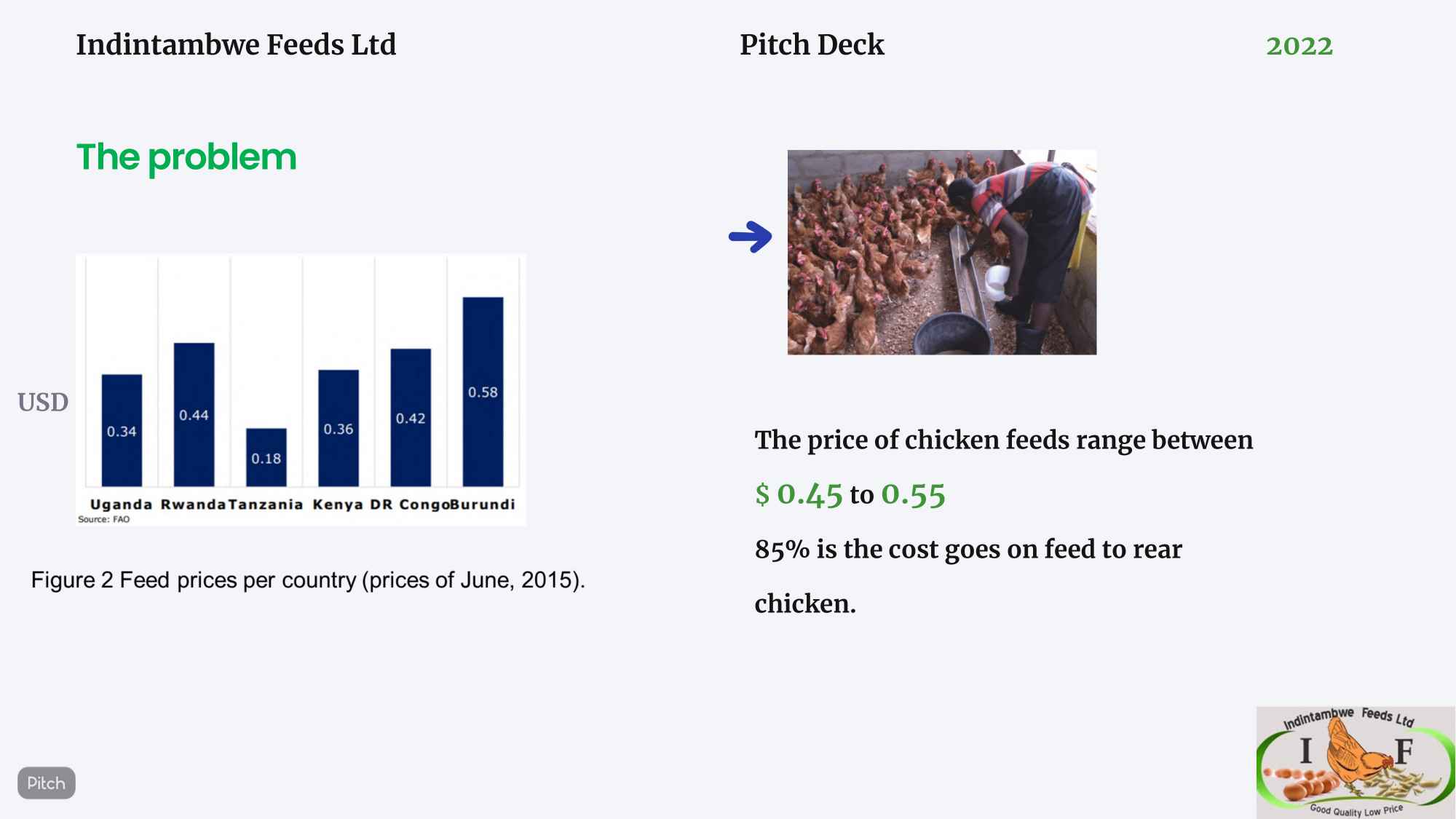
Poultry feed is the largest cost in chicken rearing — about 85% of total production cost. Regional feed prices (FAO, June 2015) ranged from $0.18/kg (Tanzania) to $0.58/kg (Burundi), with Rwanda at $0.44/kg. Current market prices sit between $0.45 and $0.55/kg.
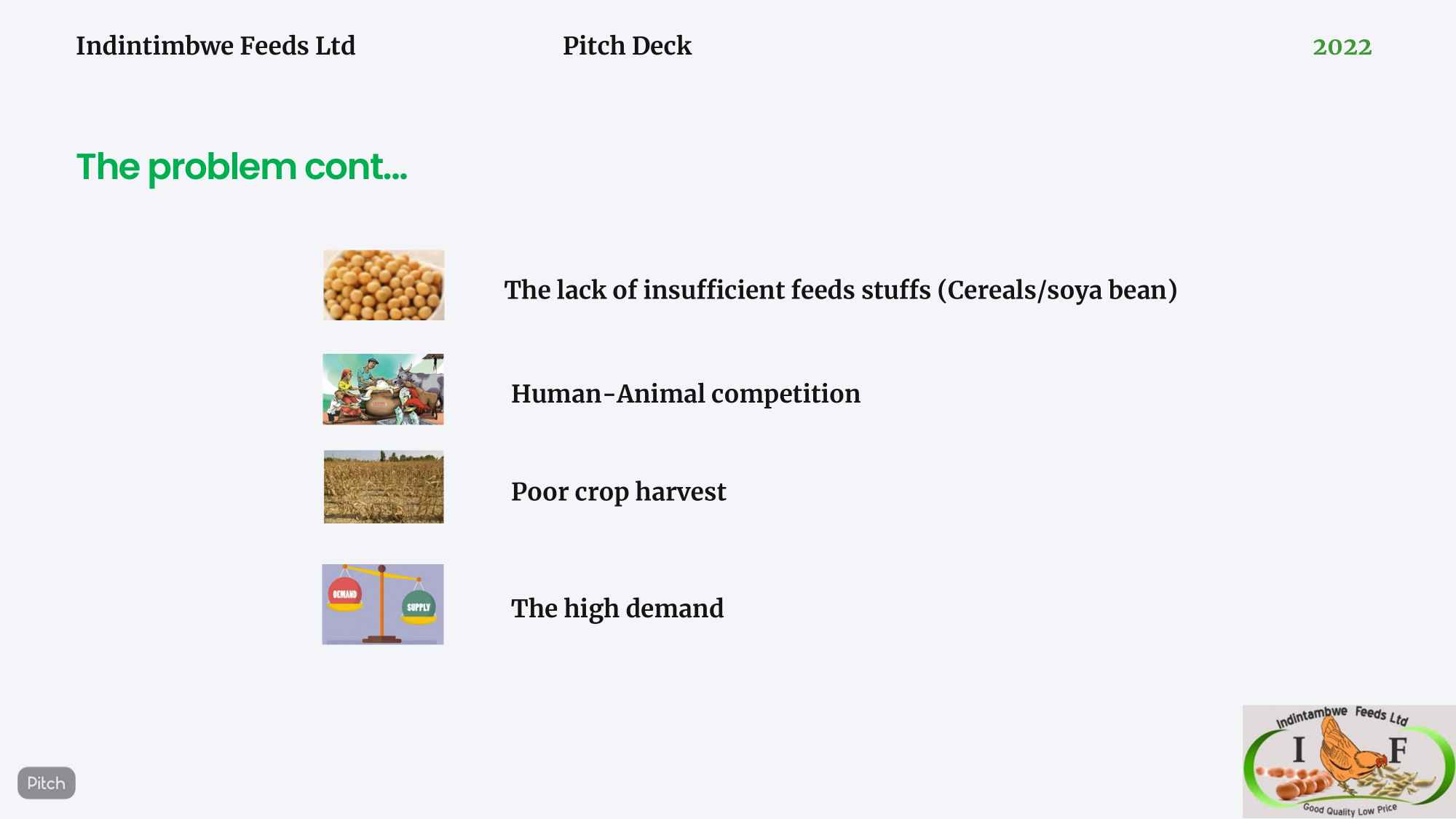
Additional challenges include:
- Insufficient feed ingredients (cereals and soya bean)
- Human–animal competition for the same crops
- Poor harvests and climate stress on feed supply
- High and rising demand outpacing supply
How farmers cope today
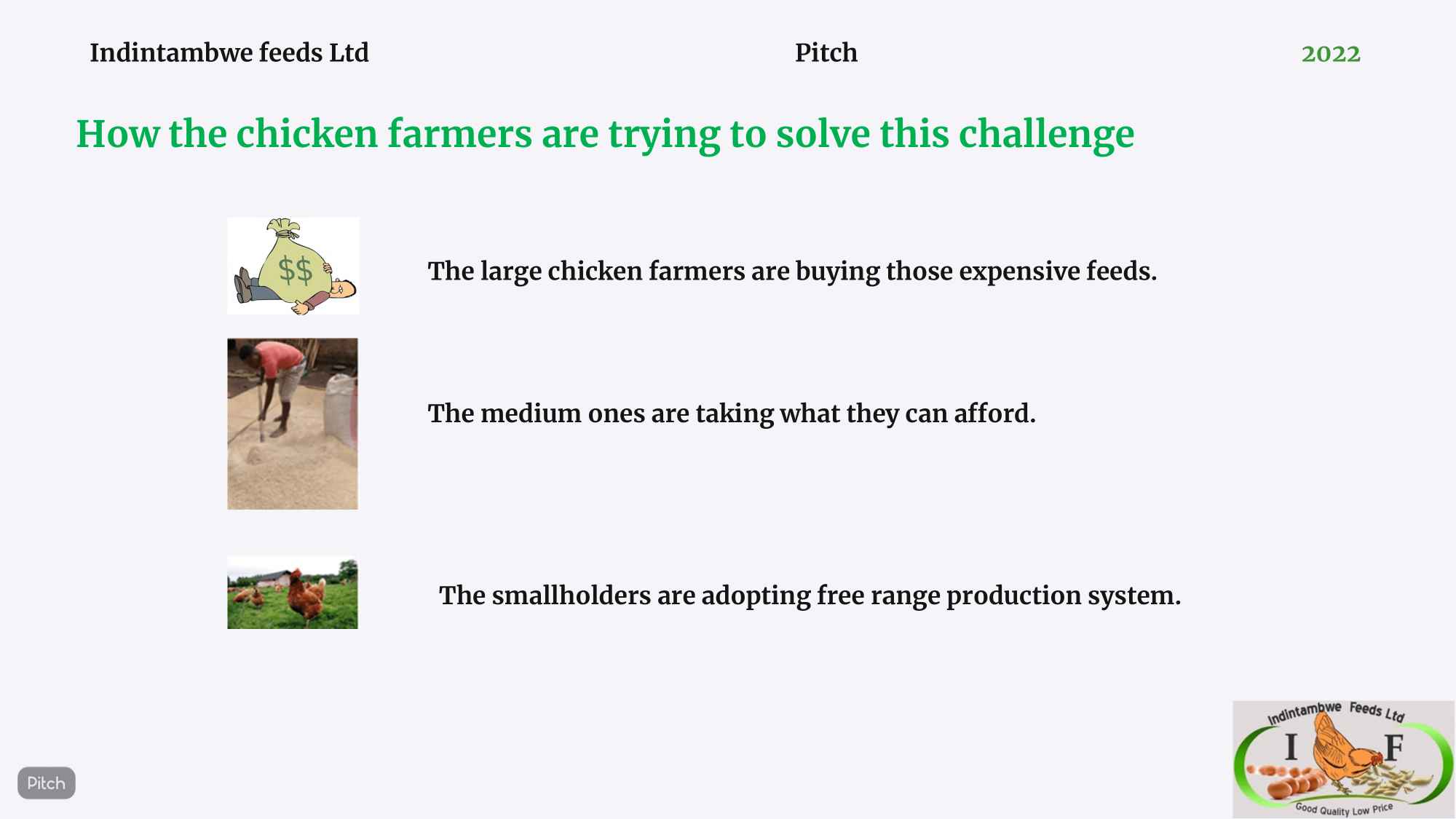
- Large farmers buy expensive commercial feed
- Medium farmers use whatever feed they can afford, often mixing locally
- Smallholders adopt free-range systems to reduce feed bills
The solution
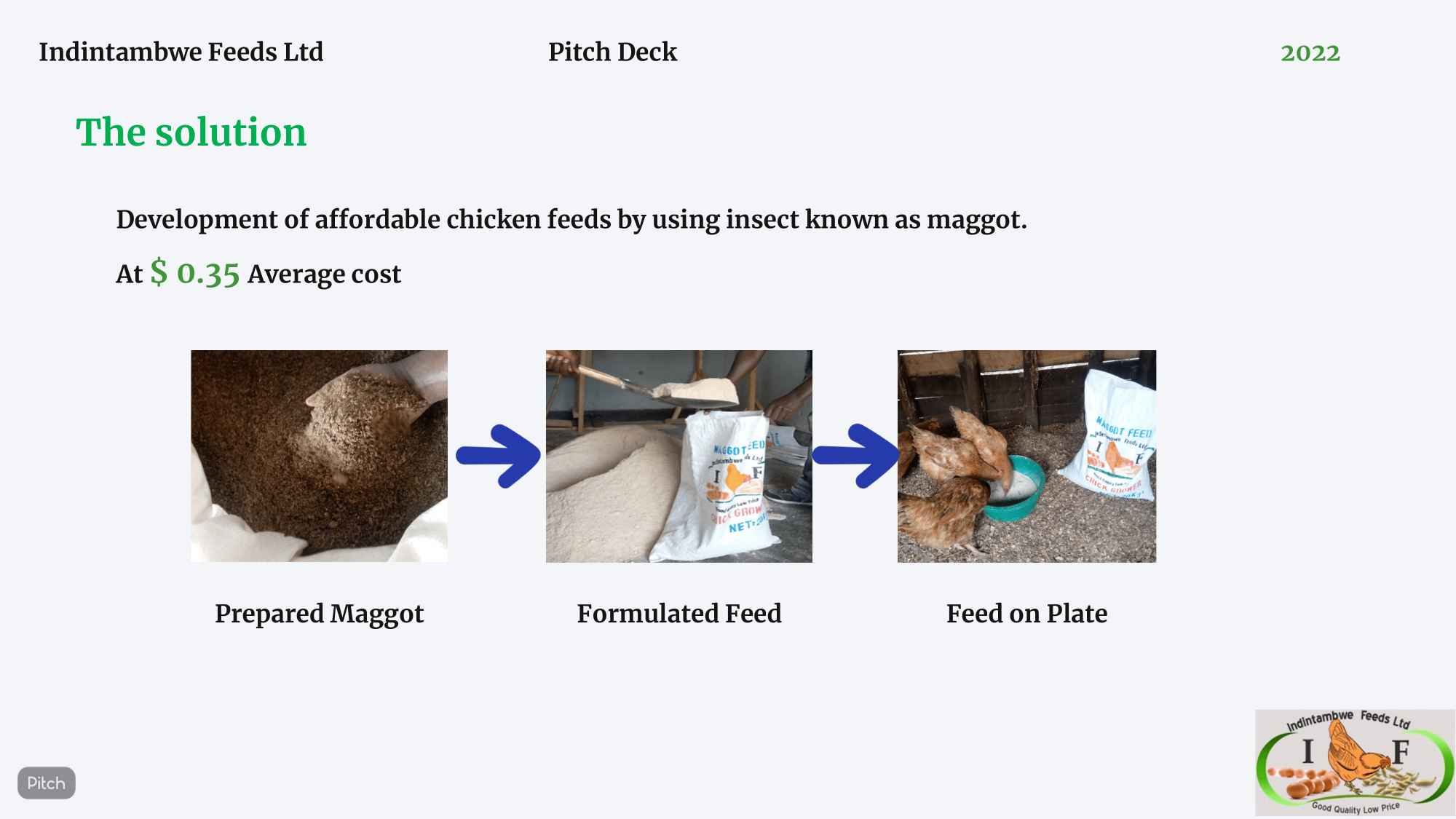
Indintambwe formulates affordable chicken feed by replacing part of conventional protein with processed maggot meal. The process flow: prepare maggots → formulate and bag Maggot Feed → supply farmers at roughly $0.35/kg.
Products
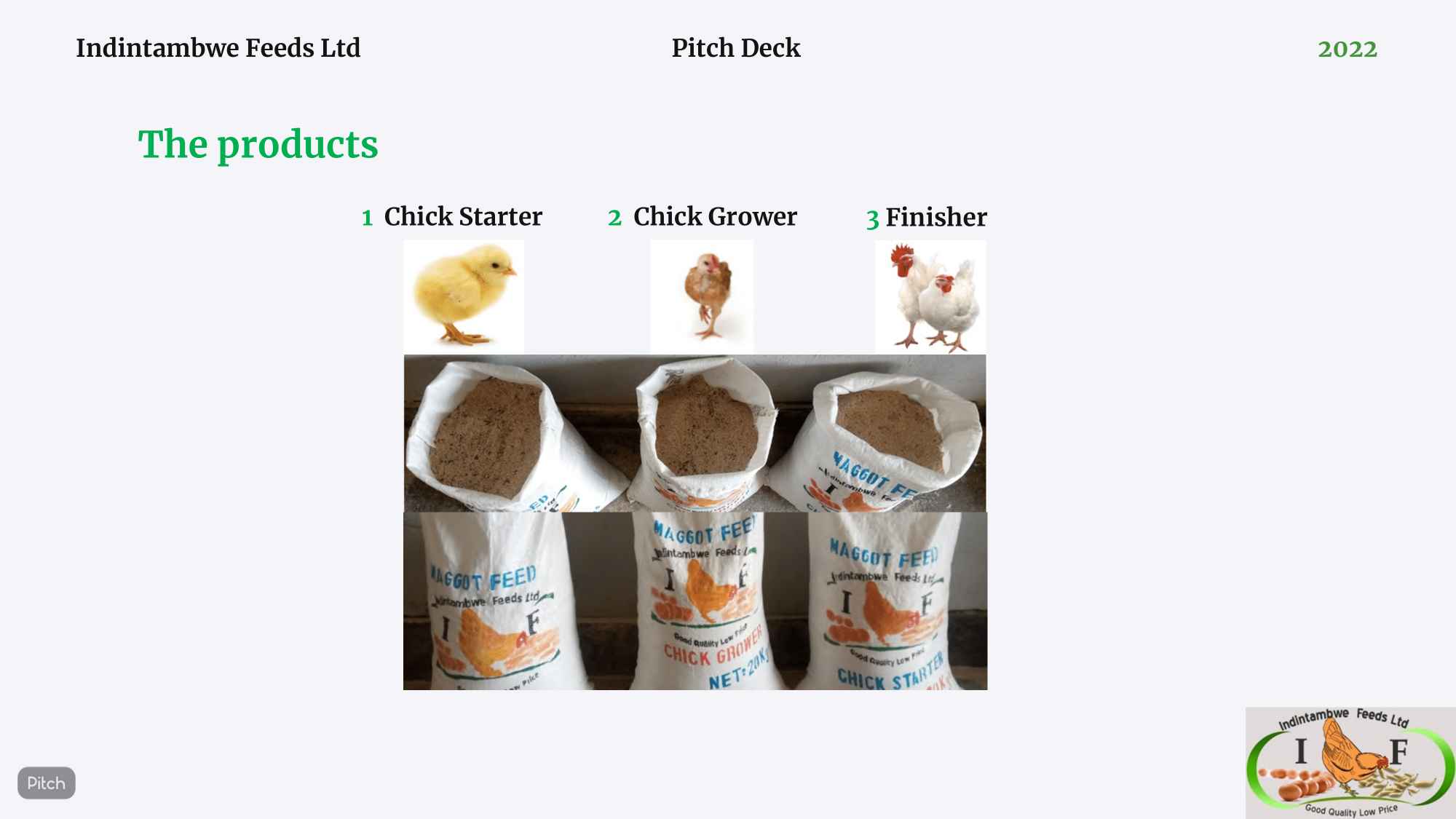
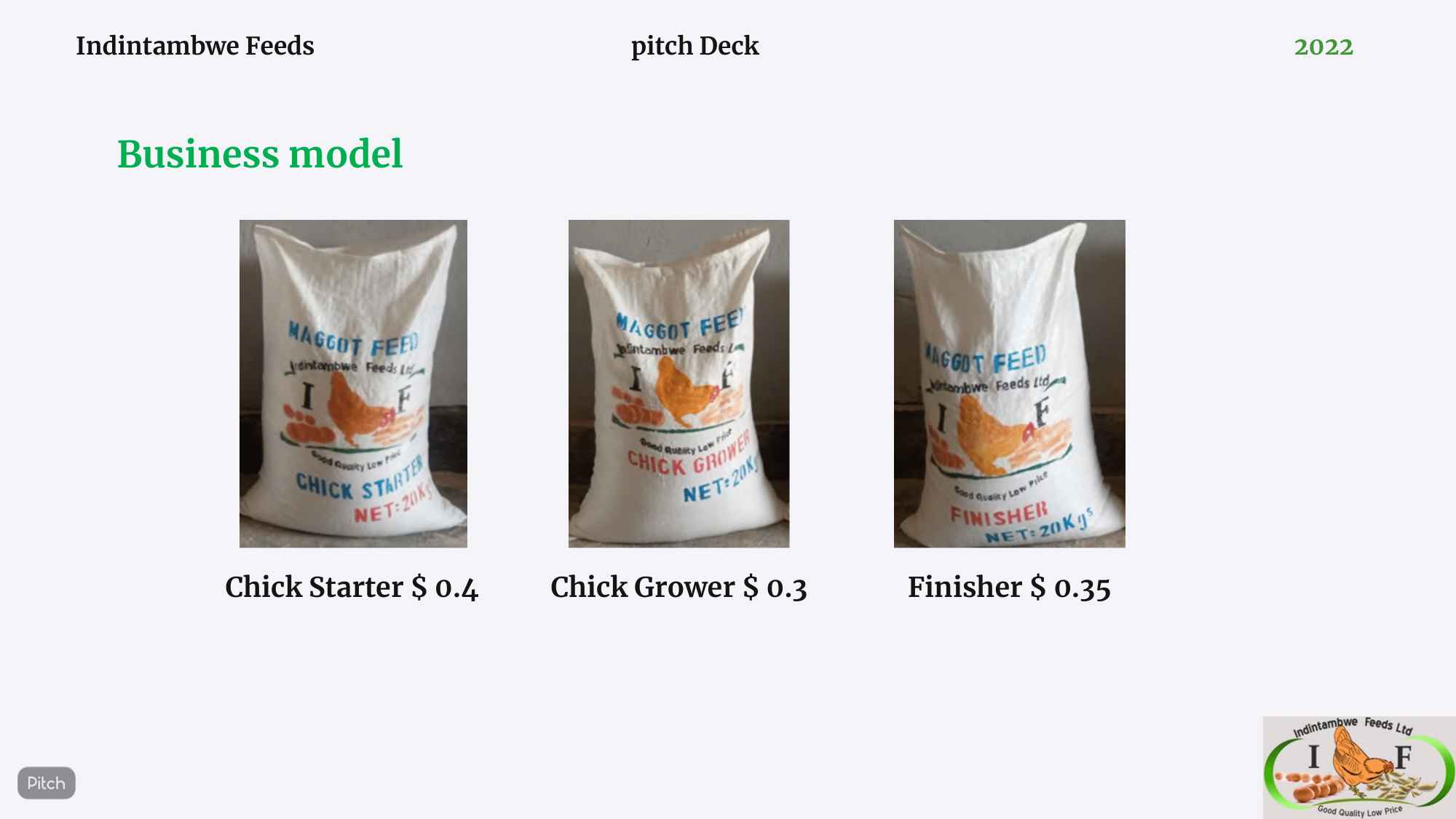
Three poultry feed lines under the Maggot Feed brand (20 kg bags):
- Chick Starter — early growth phase
- Chick Grower — development phase
- Finisher — broiler finishing phase
Market opportunity
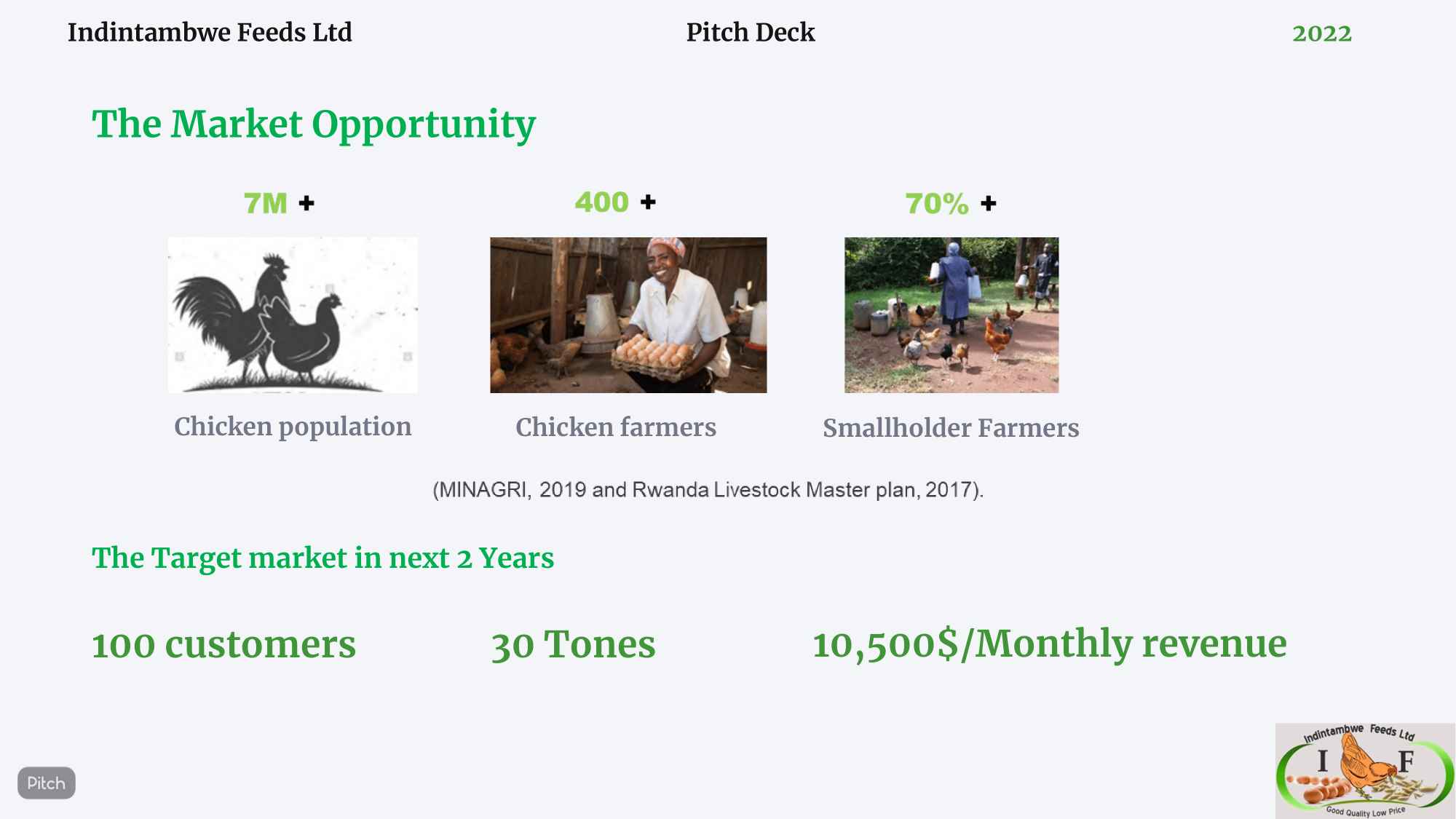
Rwanda’s poultry sector (MINAGRI 2019; Rwanda Livestock Master Plan 2017) includes:
- 7M+ chickens
- 400+ chicken farmers
- 70%+ smallholder producers
Two-year targets: 100 customers, 30 tonnes/month, $10,500 monthly revenue.
Traction
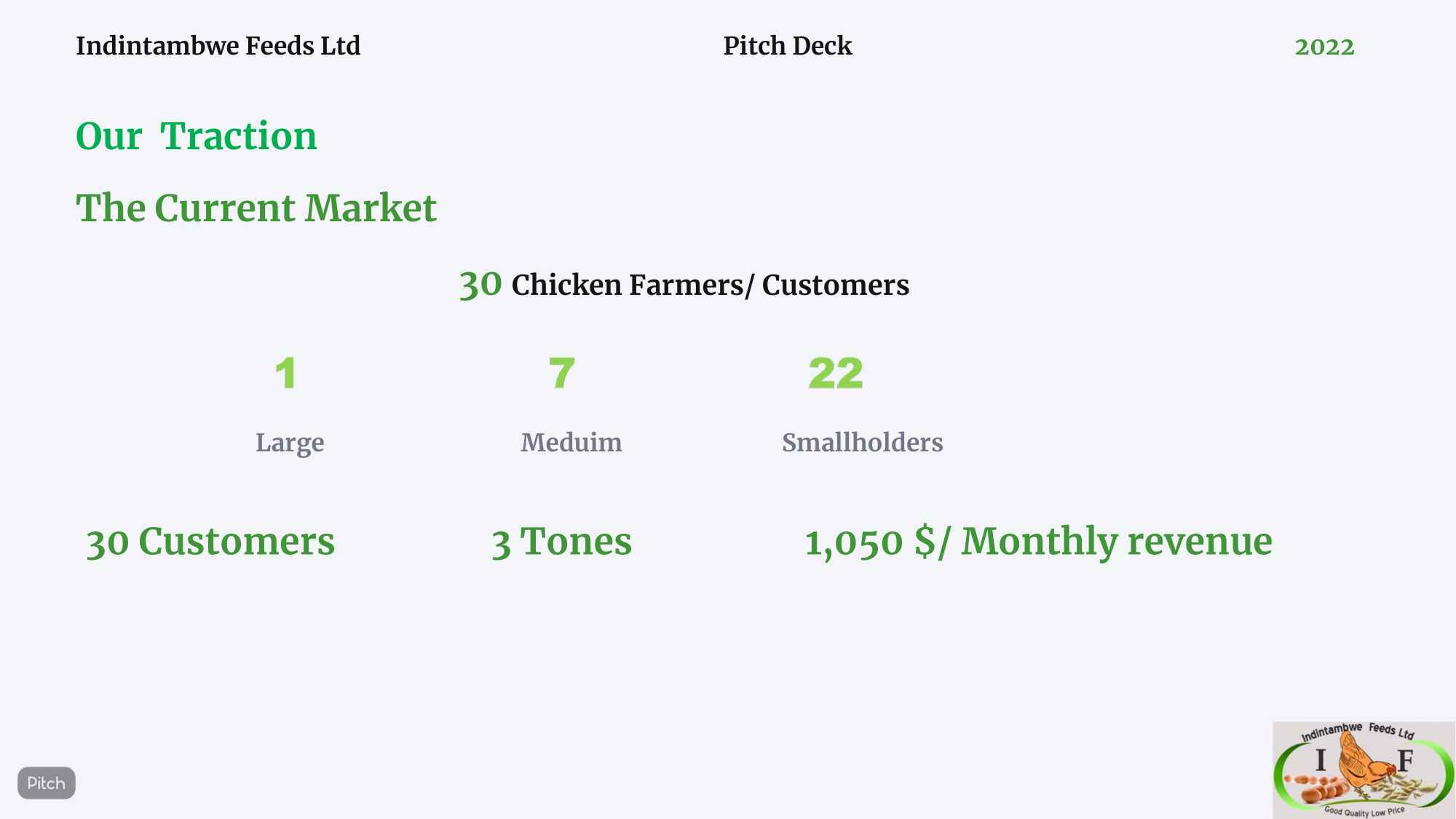
Current customer base: 30 chicken farmers (1 large, 7 medium, 22 smallholders). Production to date: 3 tonnes with roughly $1,050/month in revenue.
Feed formulation & quality
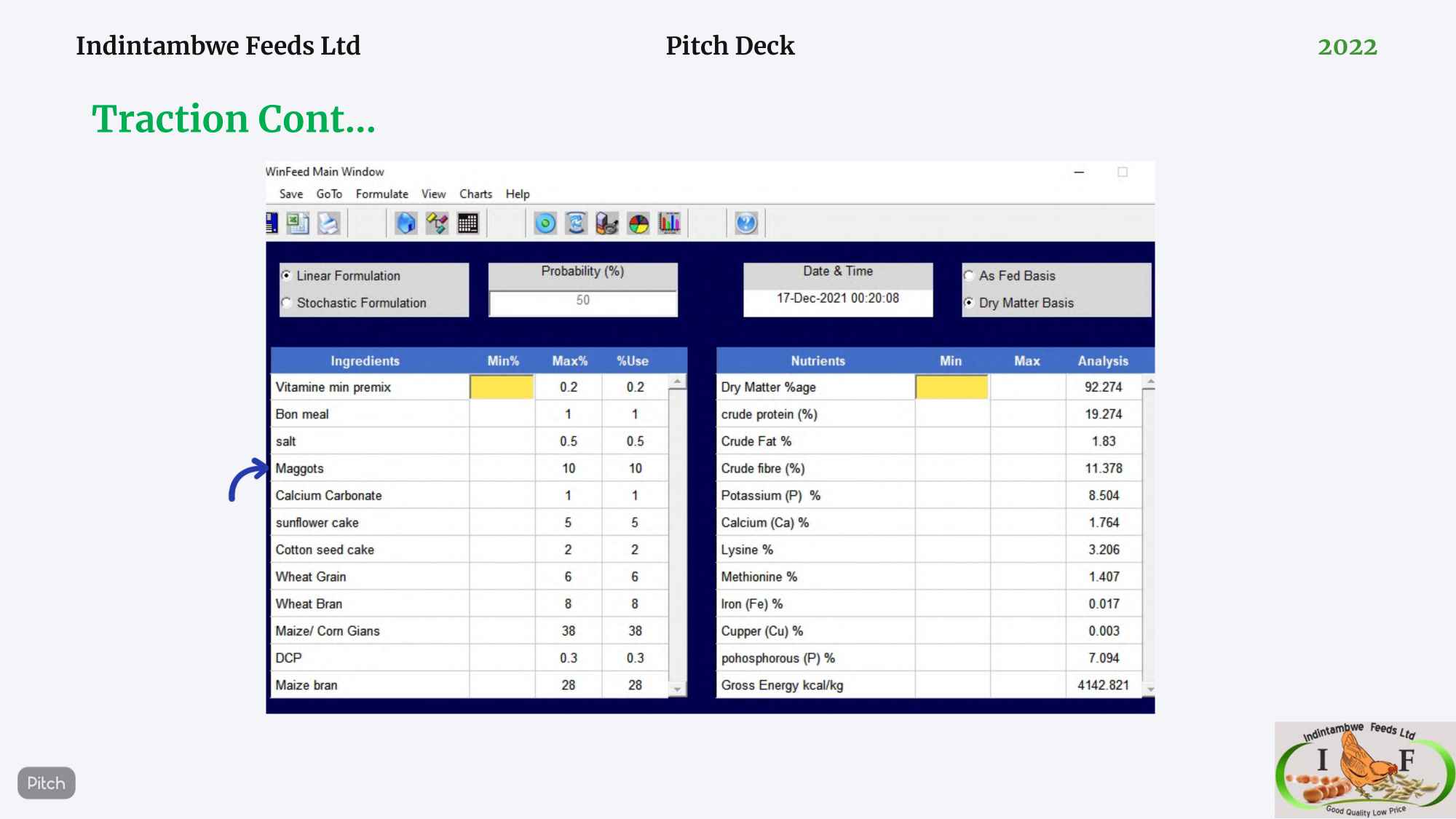
Formulations are developed in WinFeed with maggots included at up to 10% of the mix alongside maize, wheat bran, sunflower cake, and mineral premix. Typical analysis: 19% crude protein, 4143 kcal/kg gross energy.
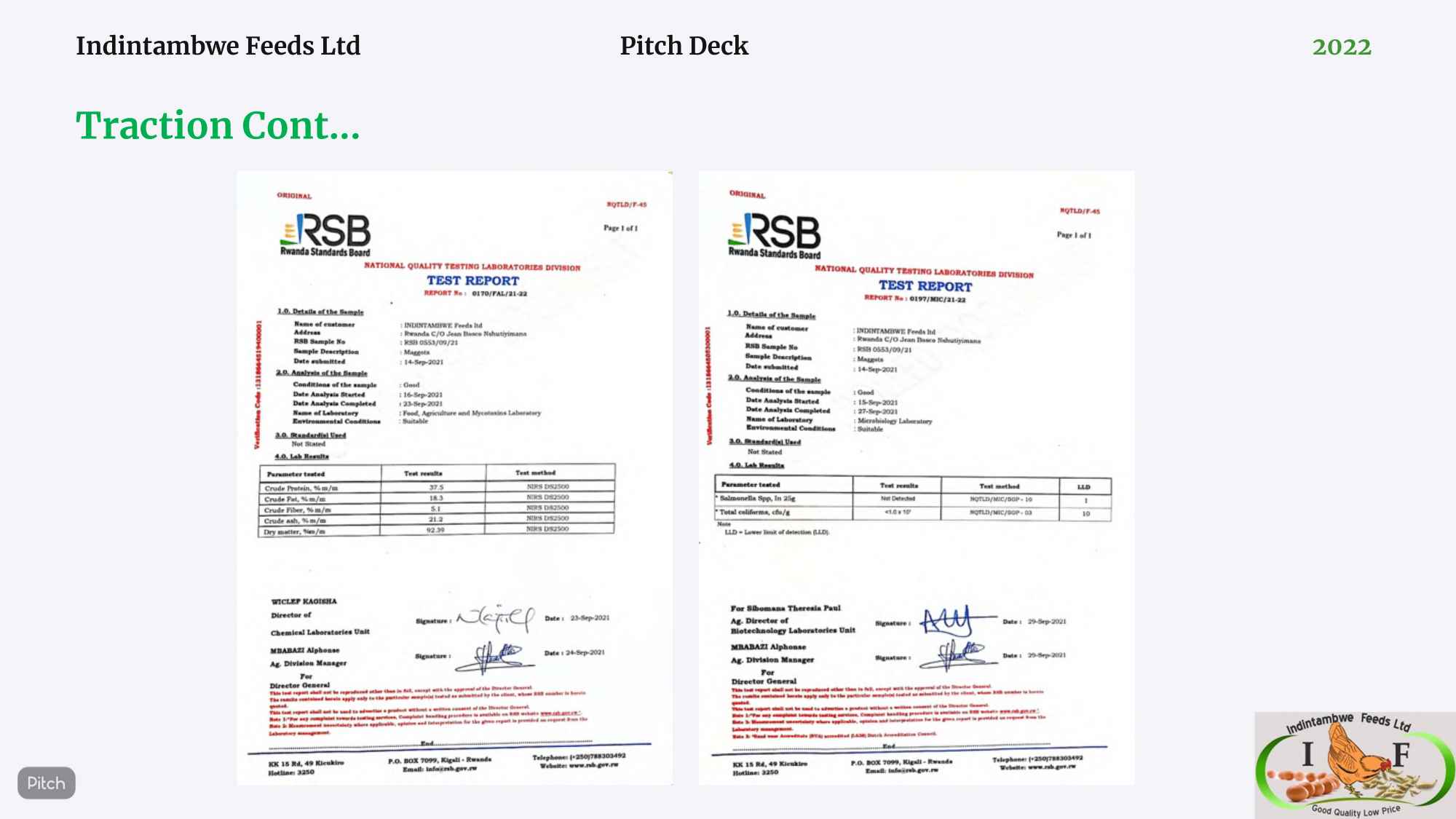
Maggot samples were tested by the Rwanda Standards Board (Sep 2021):
- Chemical (0170/FAL/21-22): 37.5% crude protein, 18.3% crude fat, 5.1% crude fibre, 21.2% ash, 92.3% dry matter
- Microbiology (0197/MIC/21-22): Salmonella not detected; total coliforms < 1.0 × 10¹ cfu/g
Business model & pricing
- Chick Starter: $0.40/kg
- Chick Grower: $0.30/kg
- Finisher: $0.35/kg
Marketing & distribution
Cost control, direct farmer engagement, social media (@indintambwe Feed Ltd on Facebook), radio/TV, and local delivery by bike and truck.

Competition
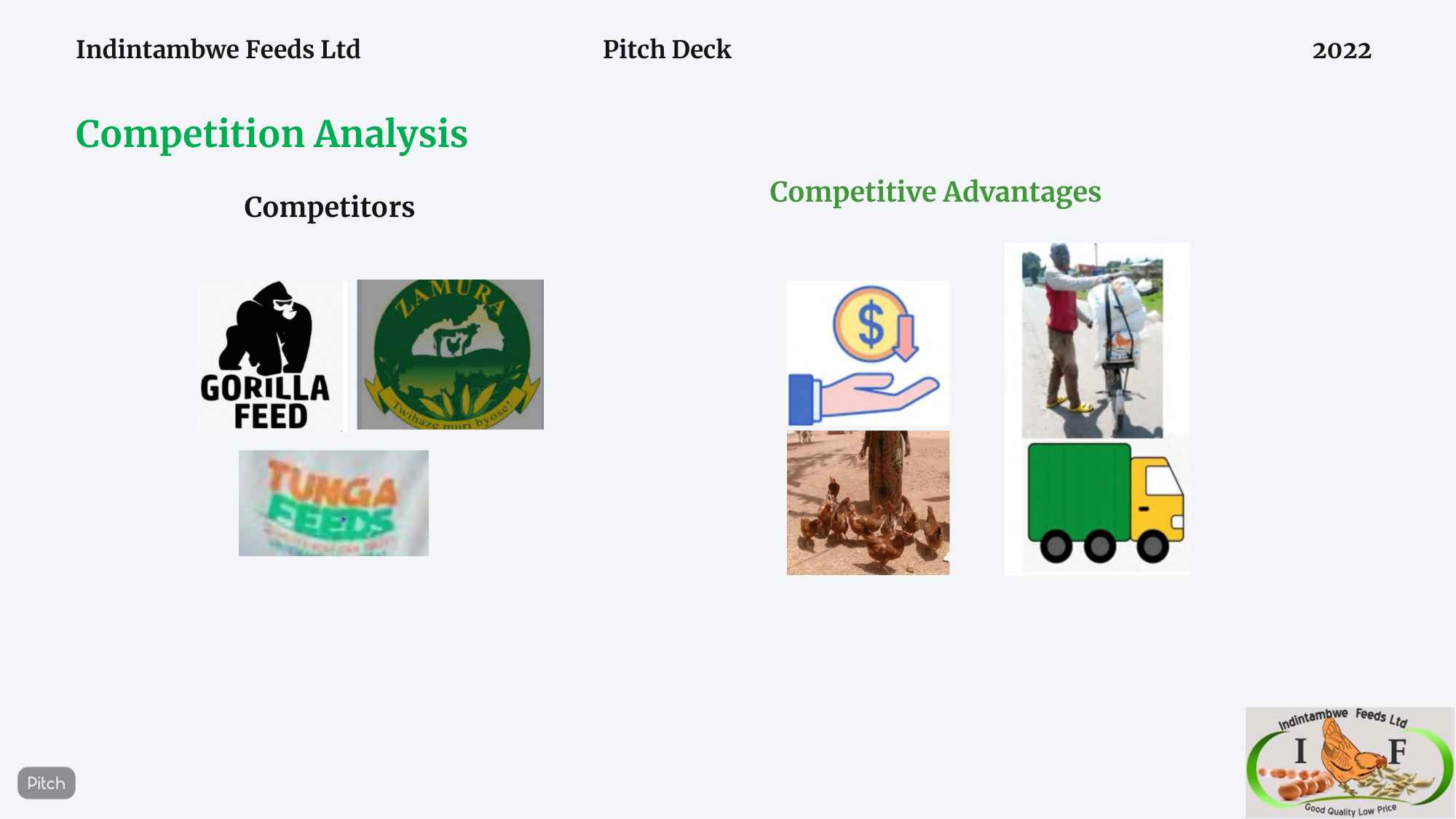
Main competitors include Gorilla Feed, Zamura, and Tunga Feeds. Indintambwe’s advantages: lower price point, proven feed performance, and grassroots distribution to smallholders.
Production roadmap
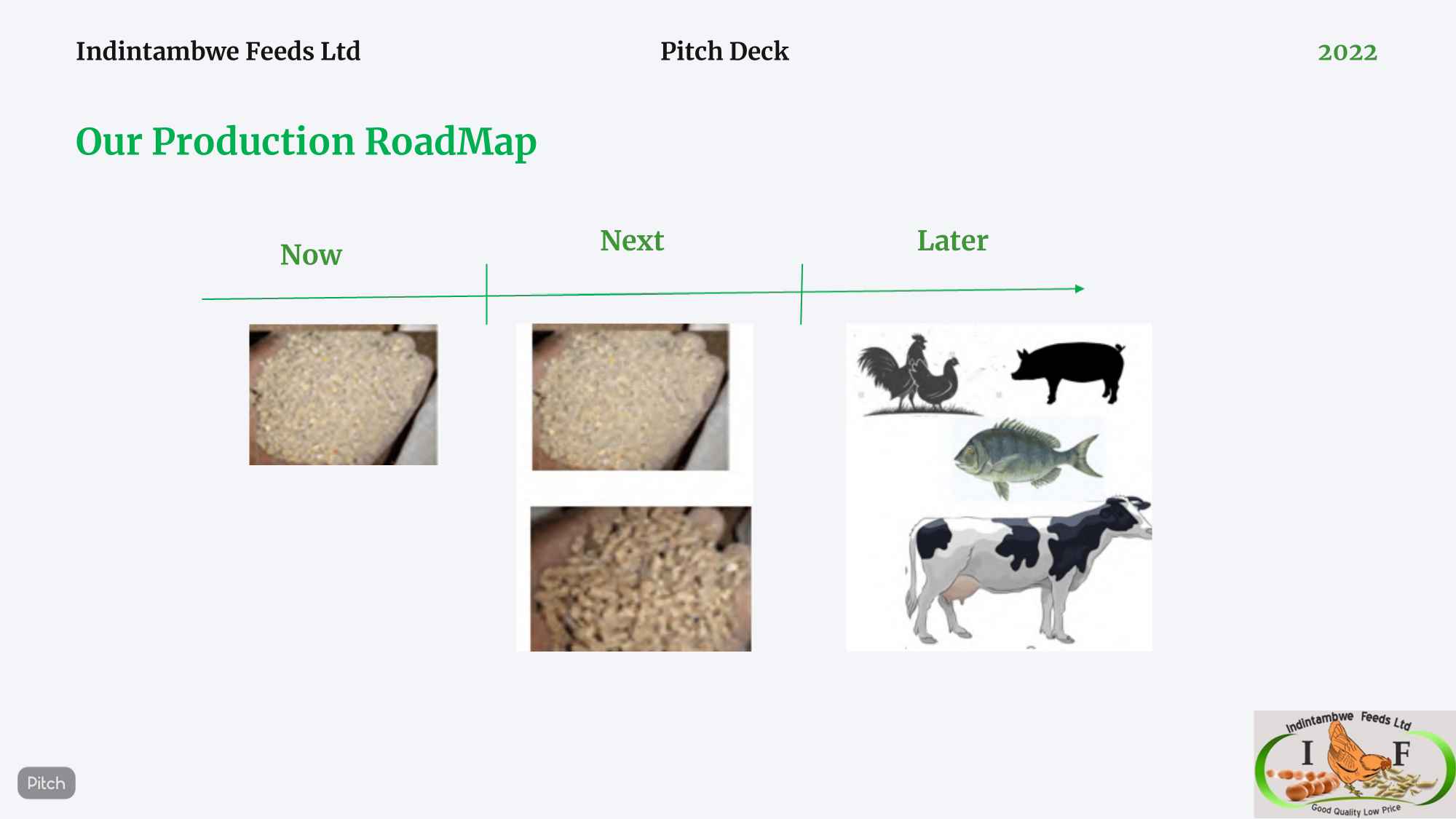
- Now: Mash/powdered maggot-based poultry feed
- Next: Pelletised feed for easier handling and storage
- Later: Expand to swine, fish, and dairy/cattle feed lines
Funding & growth plan
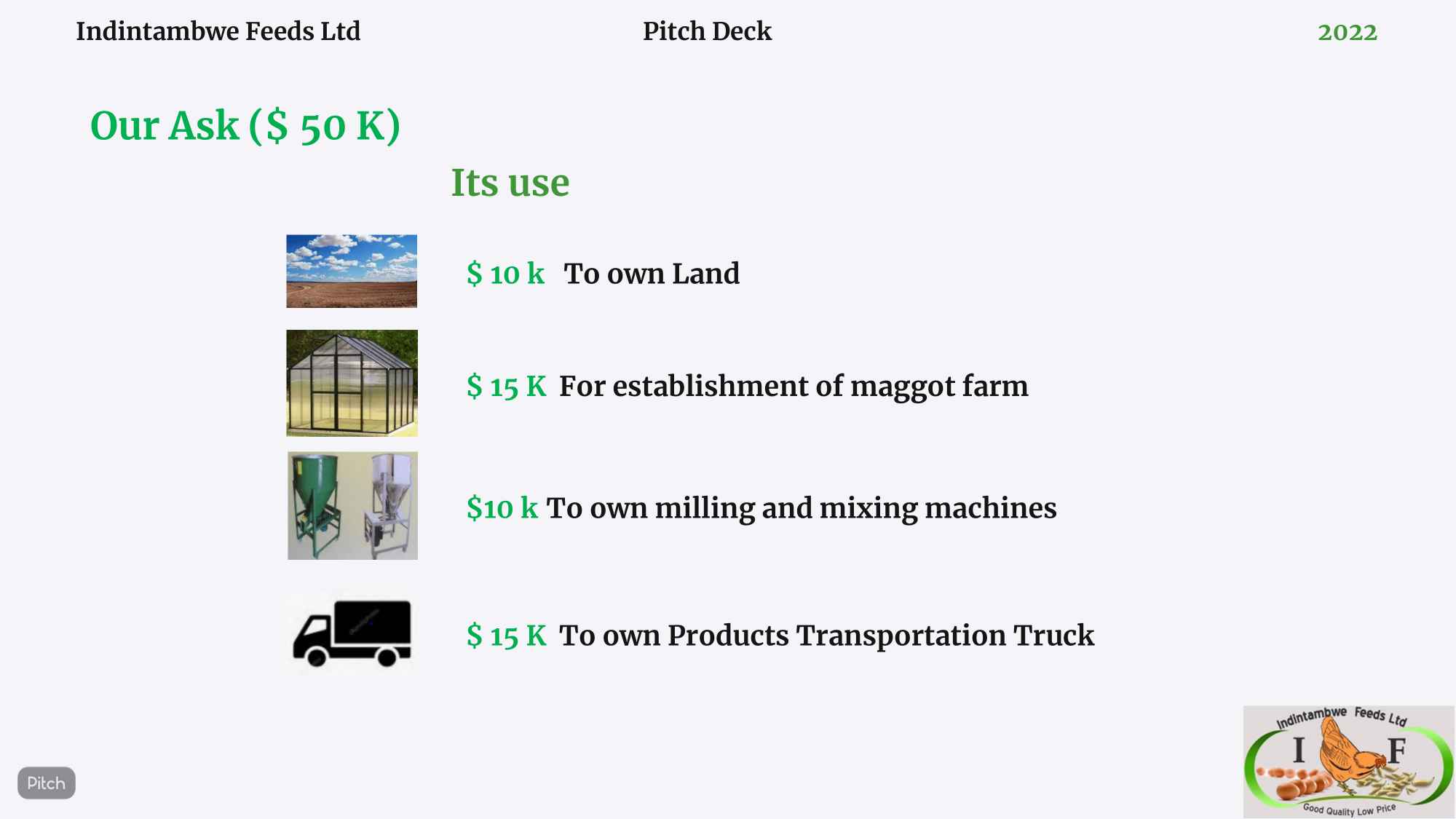
Total investment ask: $50,000 allocated to land ($10k), maggot farm setup ($15k), milling and mixing equipment ($10k), and a product transport truck ($15k).
Project team
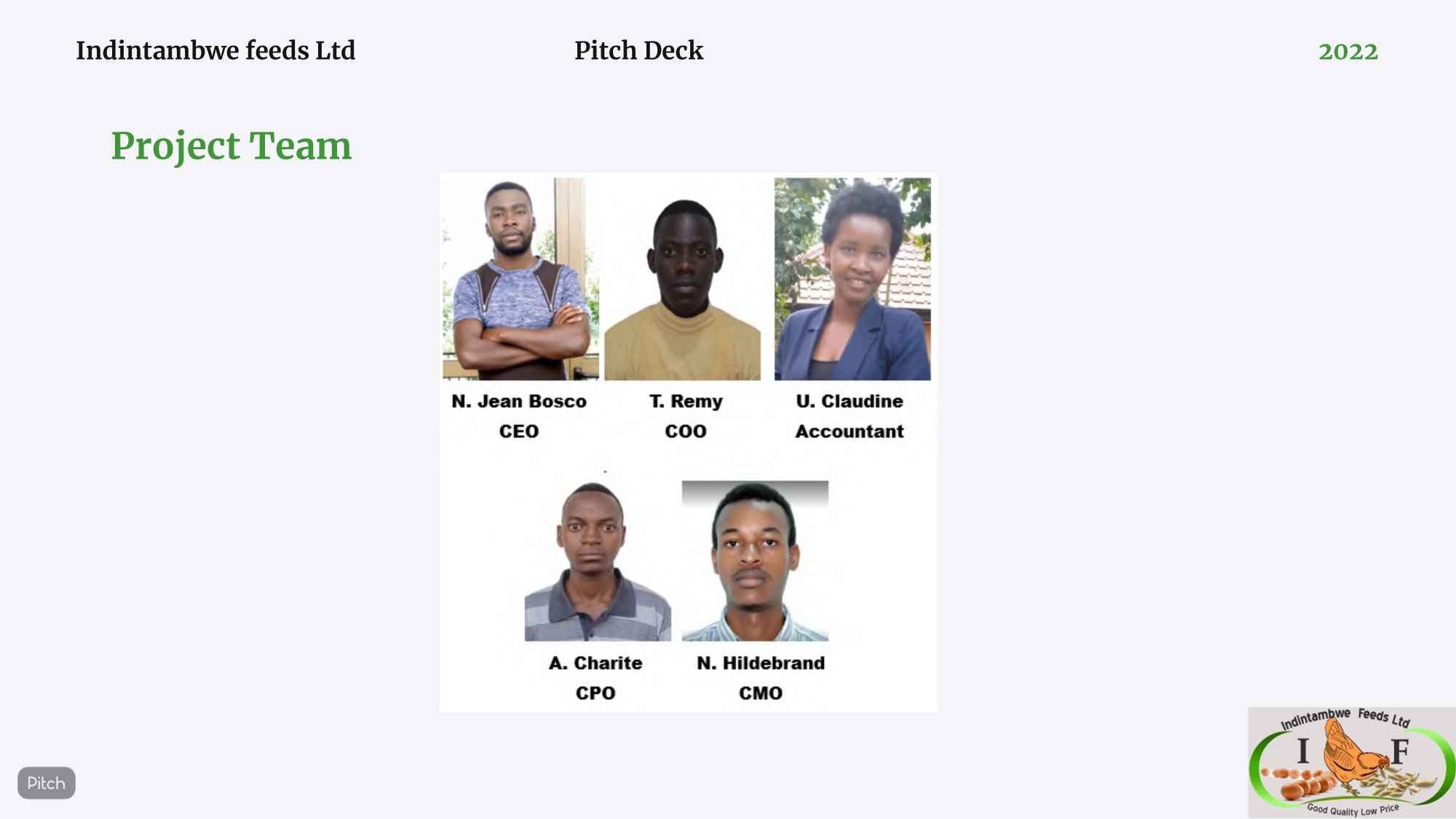
- N. Jean Bosco — CEO
- T. Remy — COO
- U. Claudine — Accountant
- A. Charite — CPO
- N. Hildebrand — CMO
Contact
Kigali, Nyarungege campus, College of Science and Technology
Phone: +250 788 433 431
Email: p.nyiringango@ur.ac.rw