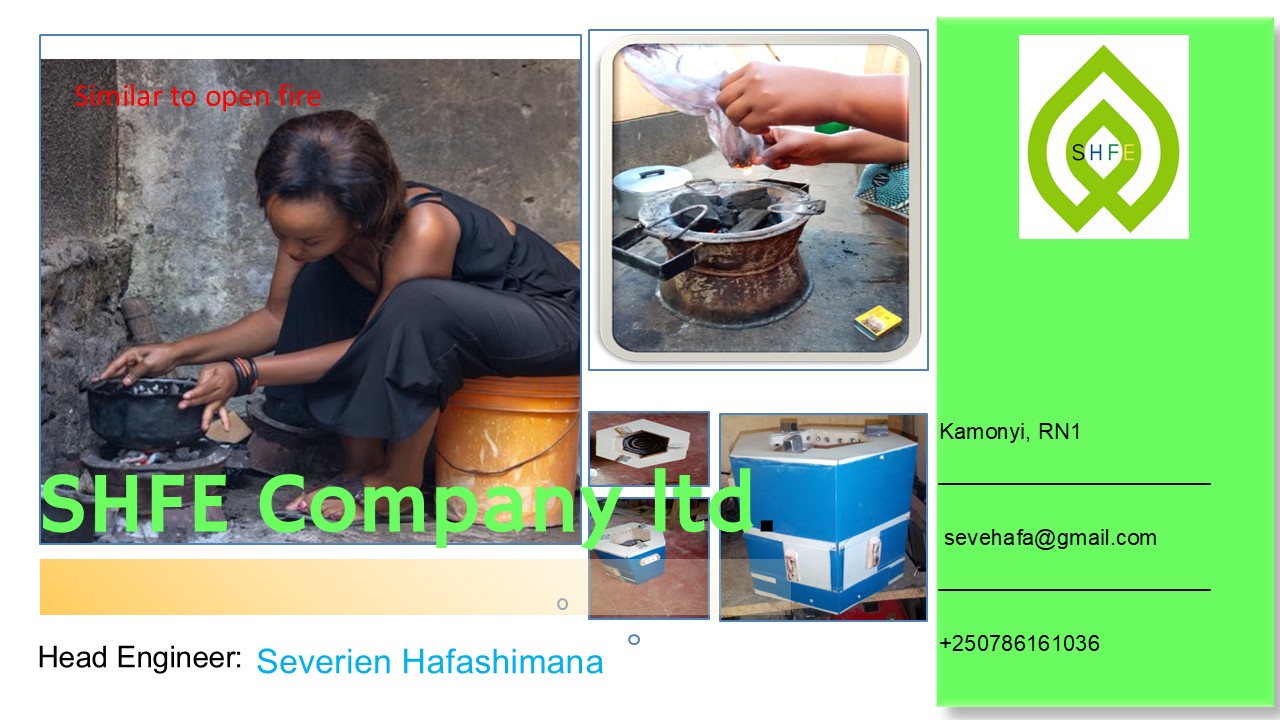
SHFE Company Ltd designs and manufactures the Optimizer Biomass Cooking Stove (Zip Stove) — an insulated biomass cooker that uses thermodynamics to trap heat at the top, reduce smoke, and cut fuel use. Based in Kamonyi (RN1), the venture targets town households across Rwanda with affordable, locally sourced materials.
- Cohort: GIIH Cohort 2
- Status: Startup stage
- Product: Optimizer biomass cooking stove (Zip Stove)
- Pricing: 3,500 RWF (basic) · 15,000 RWF (electric ignition)
- Contact: sevehafa@gmail.com · +250 786 161 036
- Sector: Clean energy & cookstoves
The problem
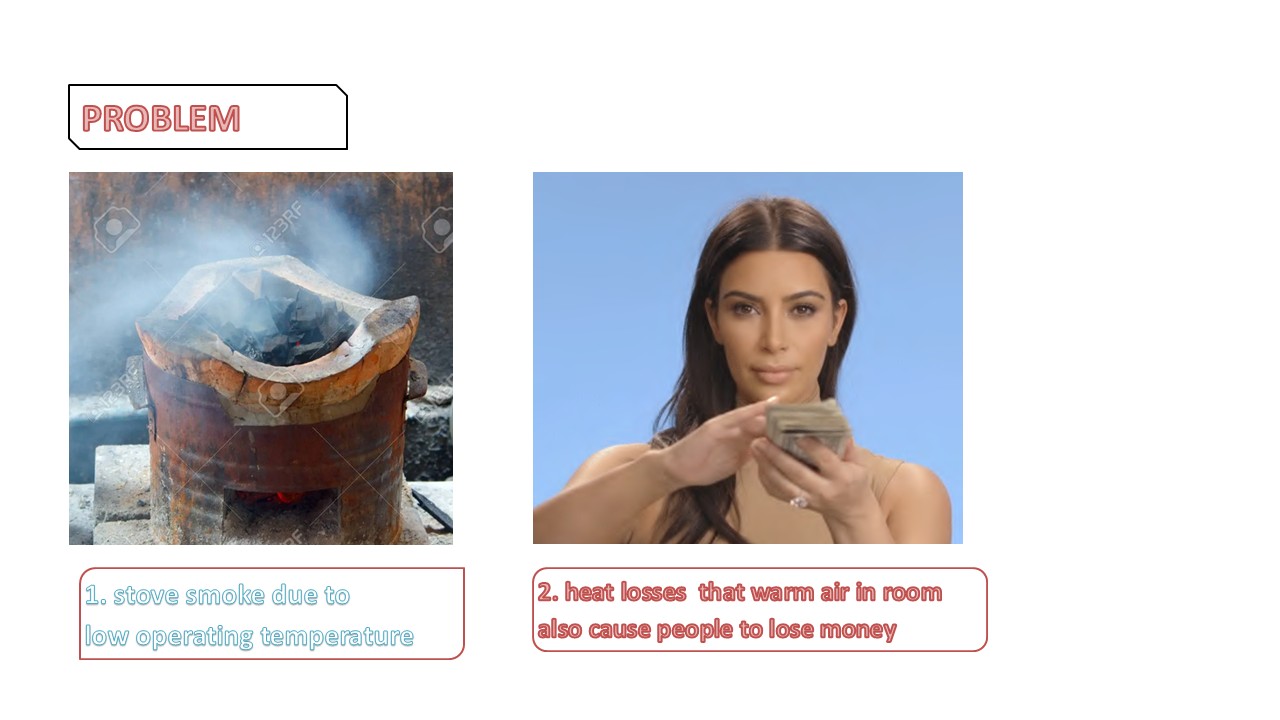
- Stove smoke from low operating temperatures in traditional charcoal and open-fire cooking
- Heat losses that warm the room instead of the pot — wasting fuel and money
- Traditional stoves behave similar to open fire, with slow ignition and high fuel consumption
The solution
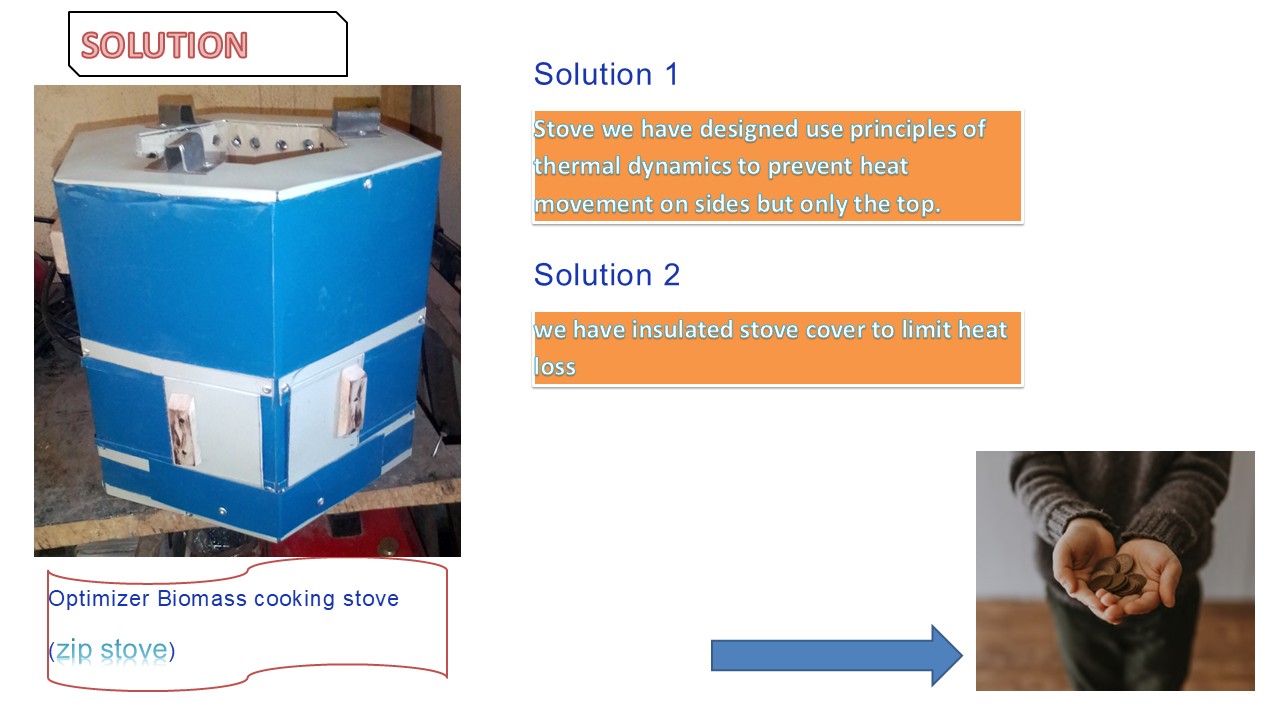
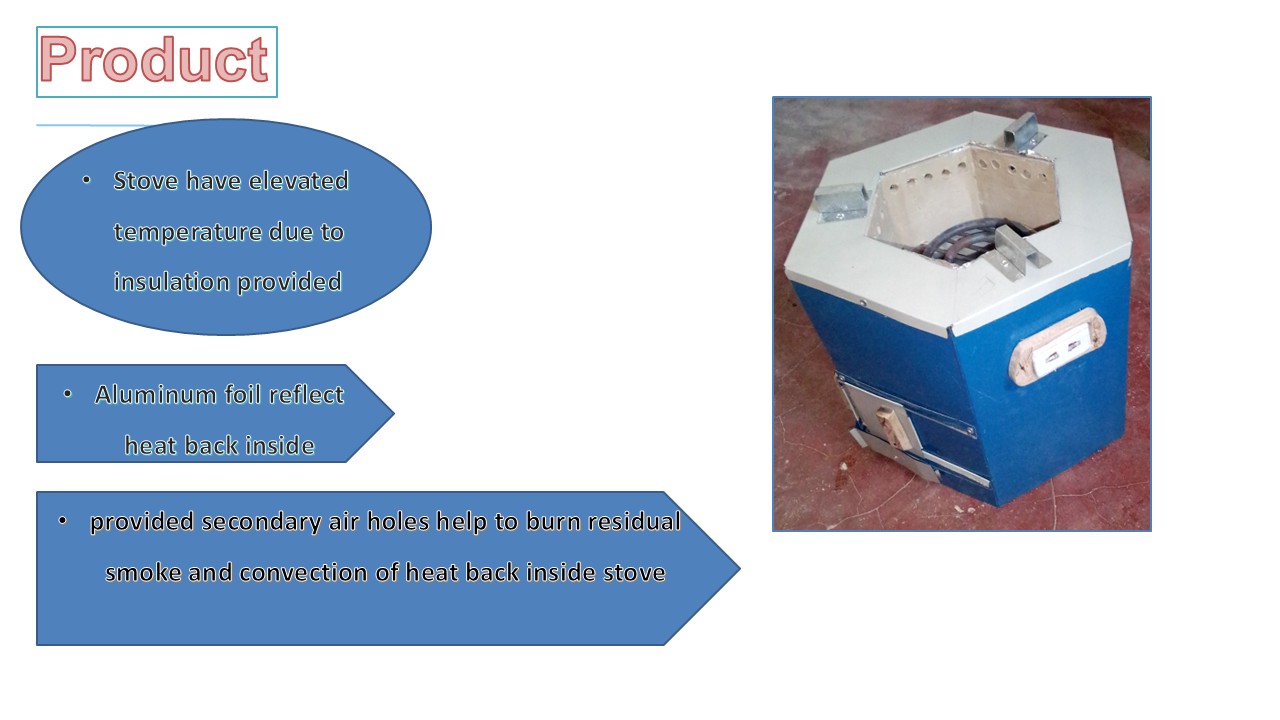
The Optimizer Biomass Cooking Stove (Zip Stove) applies principles of thermal dynamics to prevent heat escaping from the sides and direct it to the cooking surface.
- Solution 1: Insulated stove cover to limit heat loss
- Solution 2: Aluminum foil reflects heat back inside; secondary air holes burn residual smoke; convection recirculates heat within the stove
Product
The hexagonal Zip Stove maintains elevated temperature thanks to insulation and reflective lining. Secondary air holes help burn residual smoke; convection keeps heat inside the chamber for faster, cleaner cooking.
Uniqueness
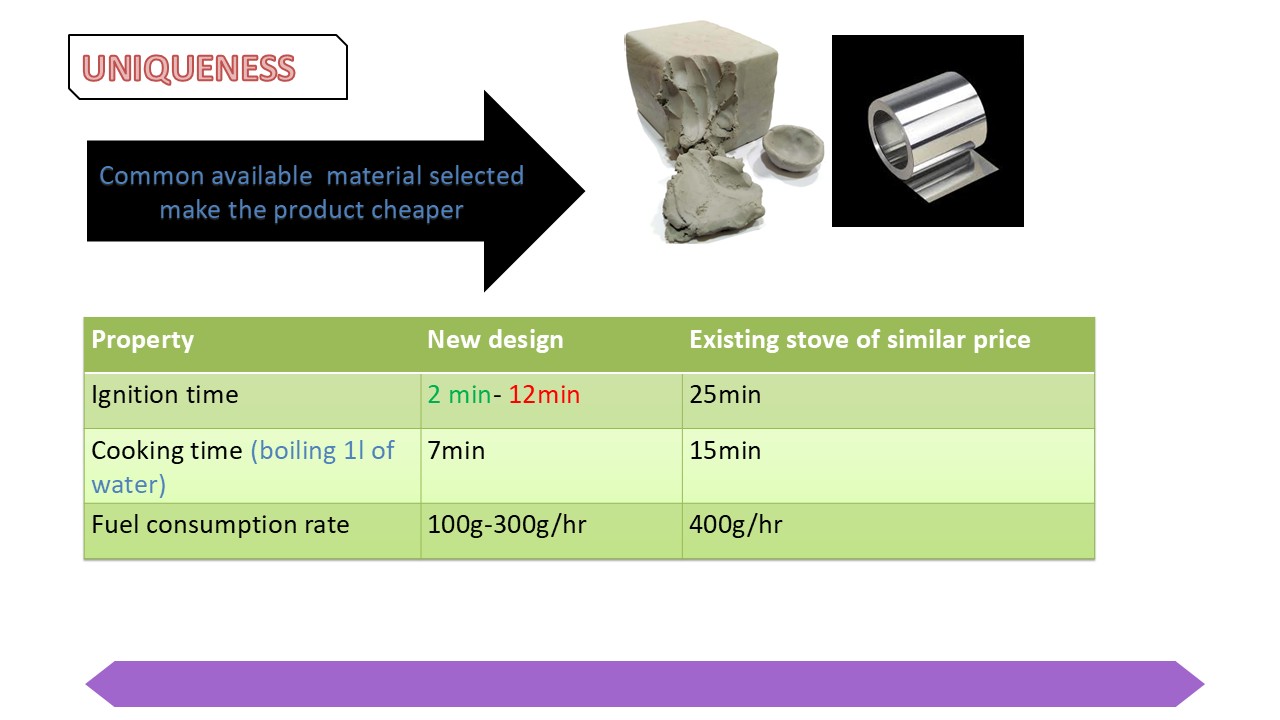
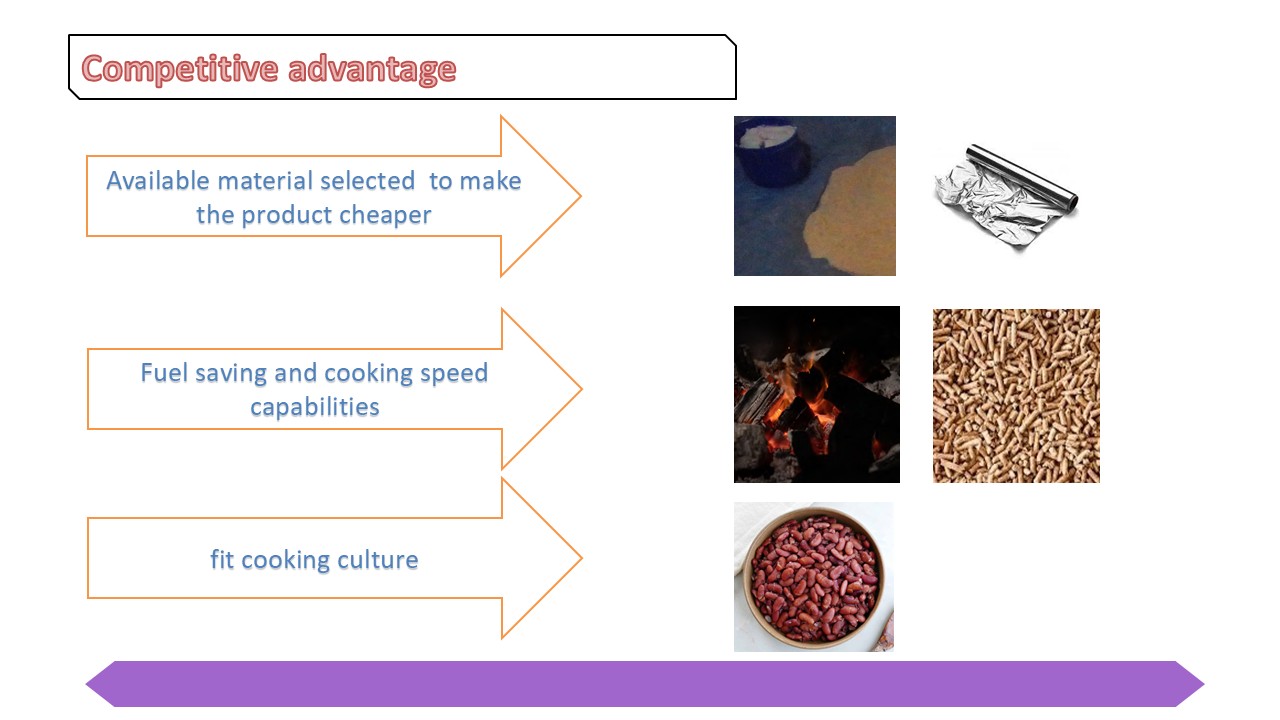
Common, locally available materials (clay/ceramic and aluminum foil) keep production costs low while outperforming stoves at a similar price point:
- Ignition time: 2–12 min (new design) vs 25 min (existing stoves)
- Boiling 1 L water: 7 min vs 15 min
- Fuel consumption: 100–300 g/hr vs 400 g/hr
Production & revenue model
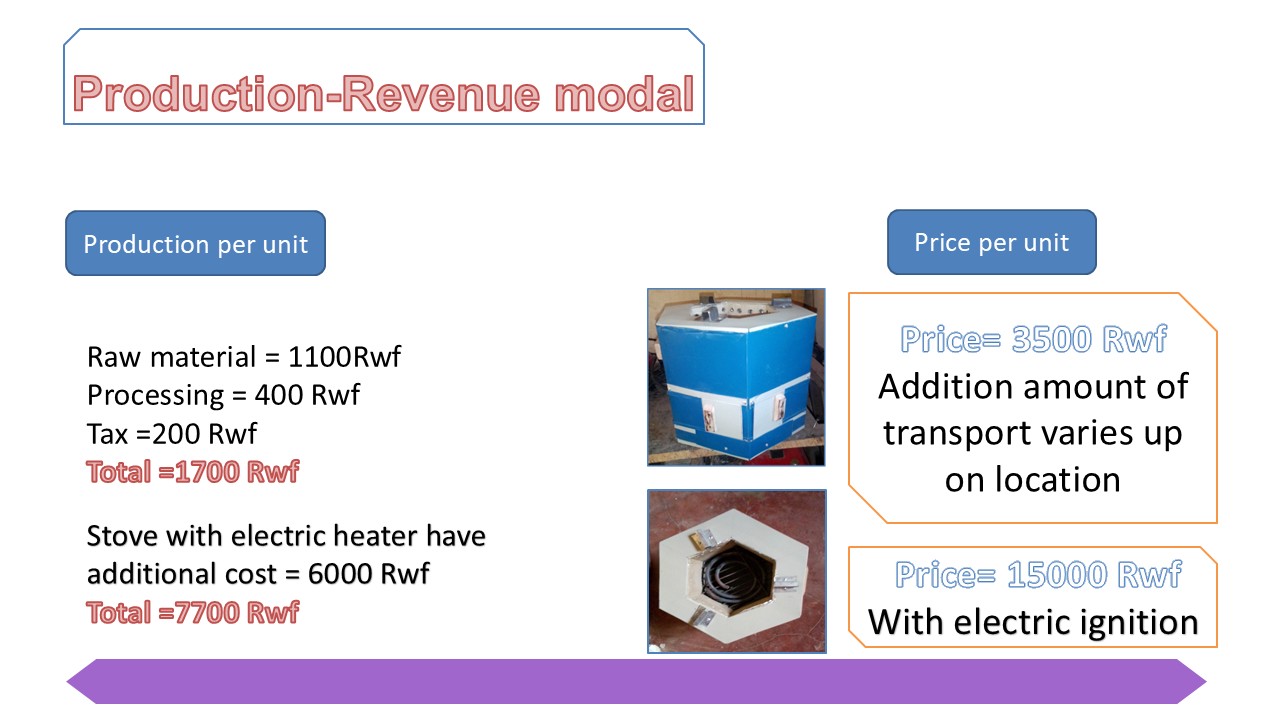
Basic stove — production cost 1,700 RWF (raw material 1,100 + processing 400 + tax 200) · selling price 3,500 RWF (+ transport by location)
Electric ignition model — production cost 7,700 RWF (includes 6,000 RWF heater) · selling price 15,000 RWF
Market size
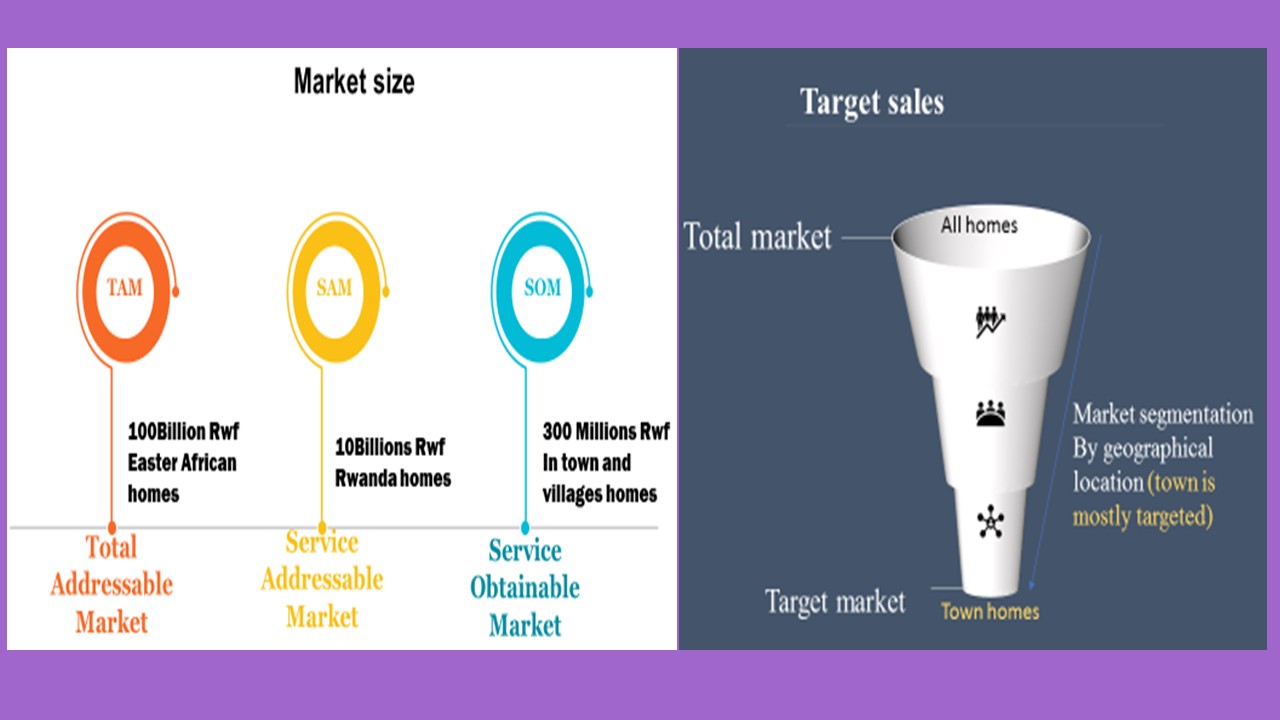
- TAM: 100 billion RWF — East African homes
- SAM: 10 billion RWF — Rwanda homes
- SOM: 300 million RWF — town and village homes
Primary segmentation targets town homes by geographical location.
Competitive advantage
- Locally available materials selected to make the product cheaper
- Fuel saving and faster cooking fit Rwandan cooking culture
- Superior ignition time, boil time, and fuel efficiency vs comparable stoves
Current customers
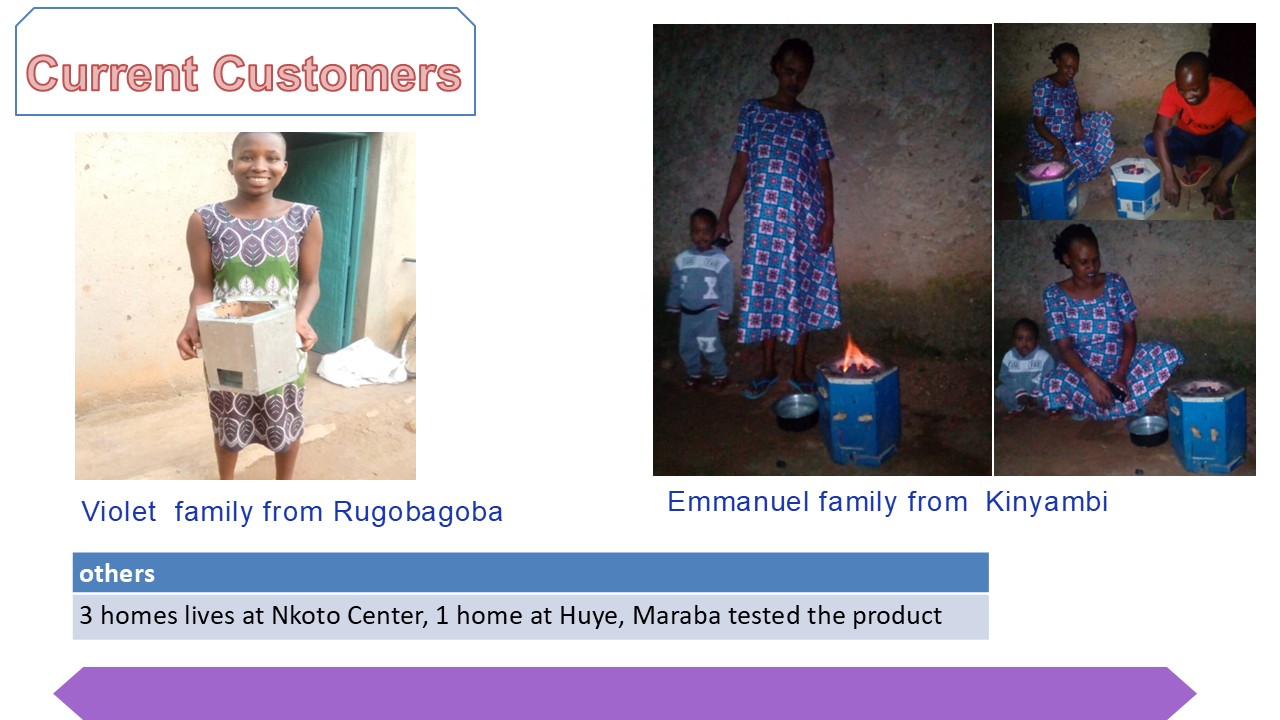
Field-tested in households across southern Rwanda:
- Emmanuel family — Kinyambi
- Violet family — Rugobagoba
- Three homes at Nkoto Center, one home at Huye, Maraba
Future customers
- Next 2 years: 2% of charcoal consumers near Kigali city
- Secondary cities: 5% of charcoal consumers
- Estimated reach: 10,000 homes
Team
- Severien Hafashimana — Head Engineer
- Julienne Uwimana — Financial in charge
- Elie Ntihinduka — Distributor

Funding needs
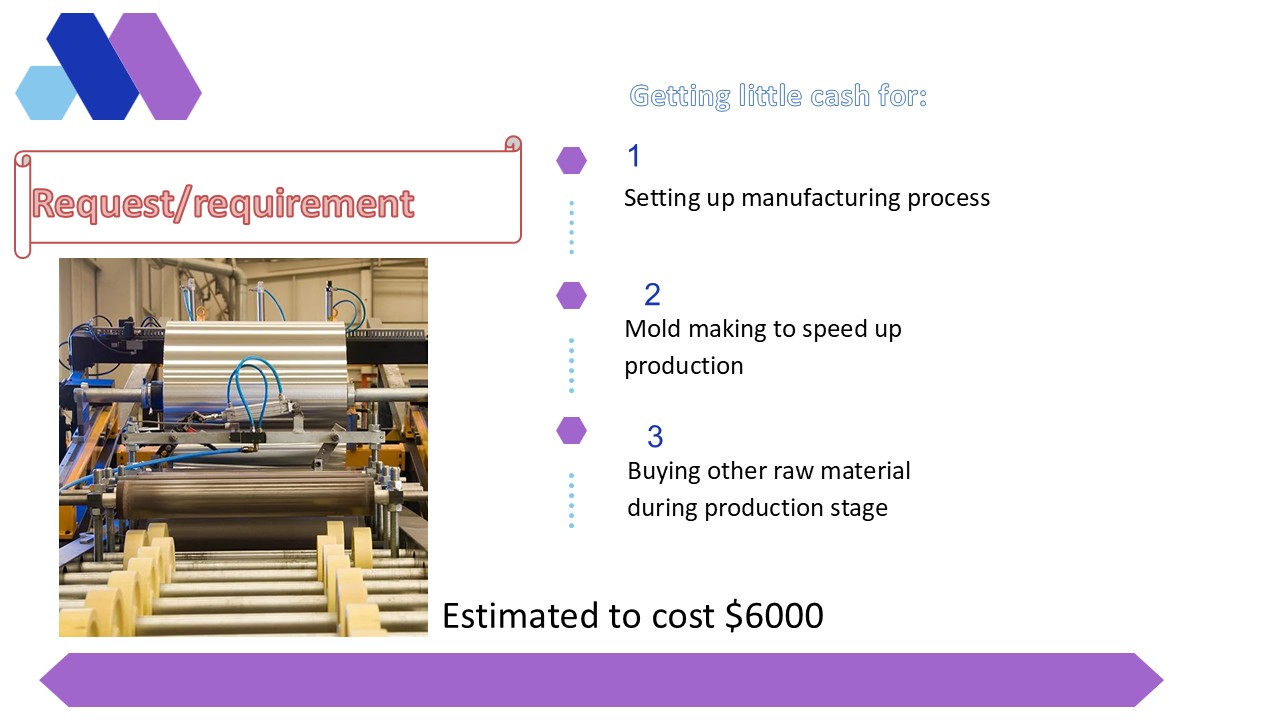
Seeking approximately $6,000 to:
- Set up the manufacturing process
- Make molds to speed up production
- Buy raw materials during the production stage
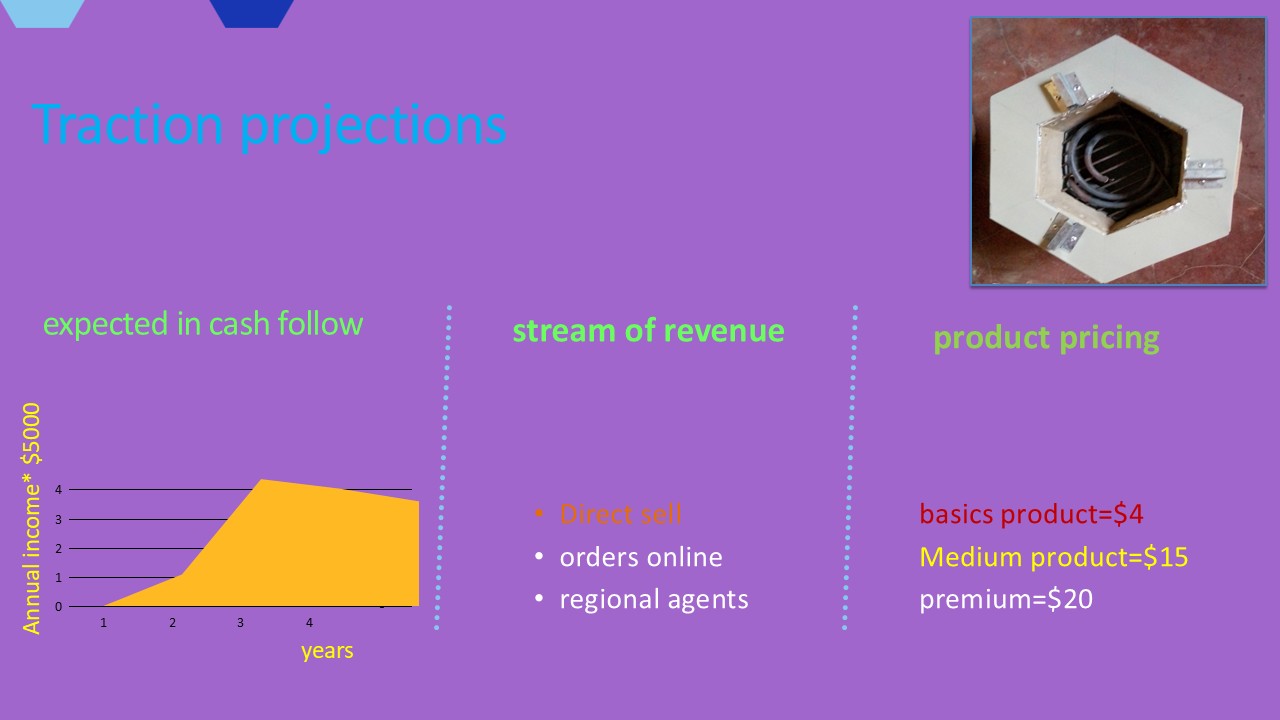
Traction projections
Revenue streams: direct sales, online orders, and regional agents.
- Basic product: $4
- Medium product: $15
- Premium product: $20
Projected annual cash flow peaks around year 3 ( $20K+), with growth from years 1–4.
Roadmap
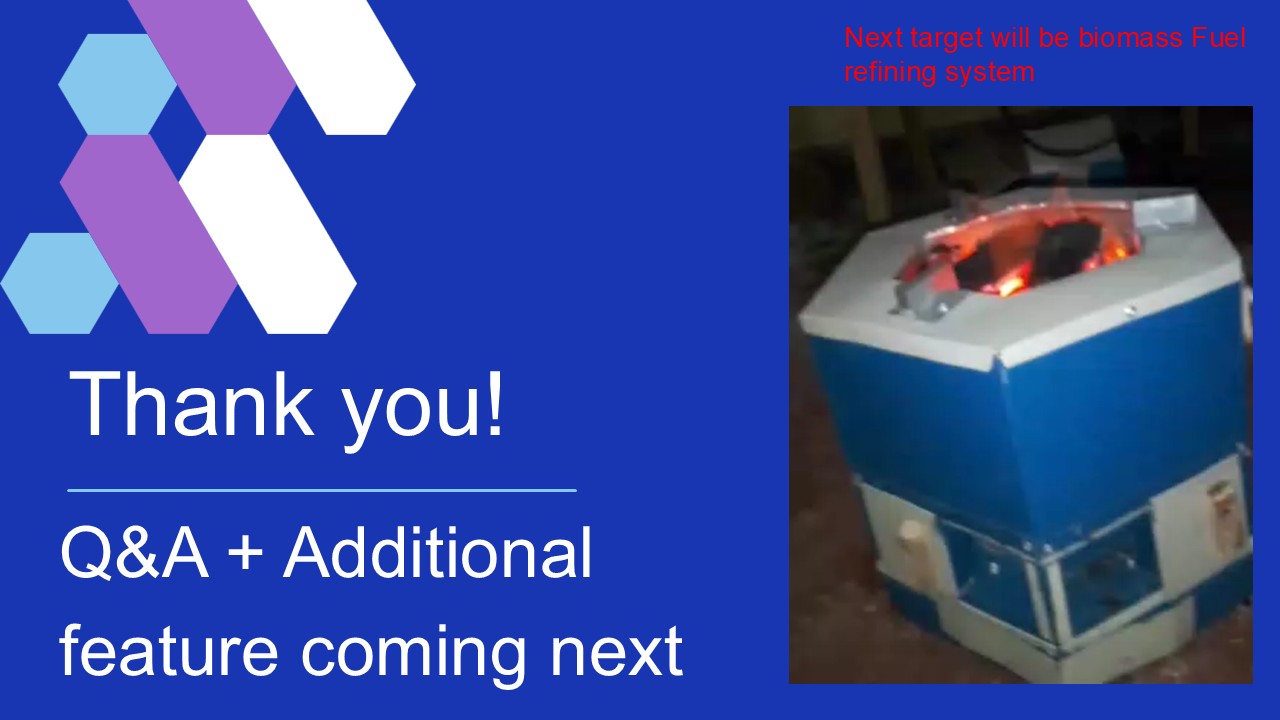
Next development target: a biomass fuel refining system to complement the Zip Stove product line.