RE-BANATEX turns discarded banana trunks into biodegradable, sustainable and cost-affordable fashion — yarn, garments, hair extensions, rugs, and vegan leather from banana fibers. Tagline: Banana trunk is not a waste until you waste it. A GIIH Cohort 3 venture.
- Cohort: GIIH Cohort 3
- Status: MVP in development · multiple competition wins
- Products: Banana-fiber yarn, garments, hair extensions, vegan leather
- Market: Rwanda fashion sector · $21.36M footwear opportunity (2025)
- Sector: Sustainable fashion & circular economy
Fashion context
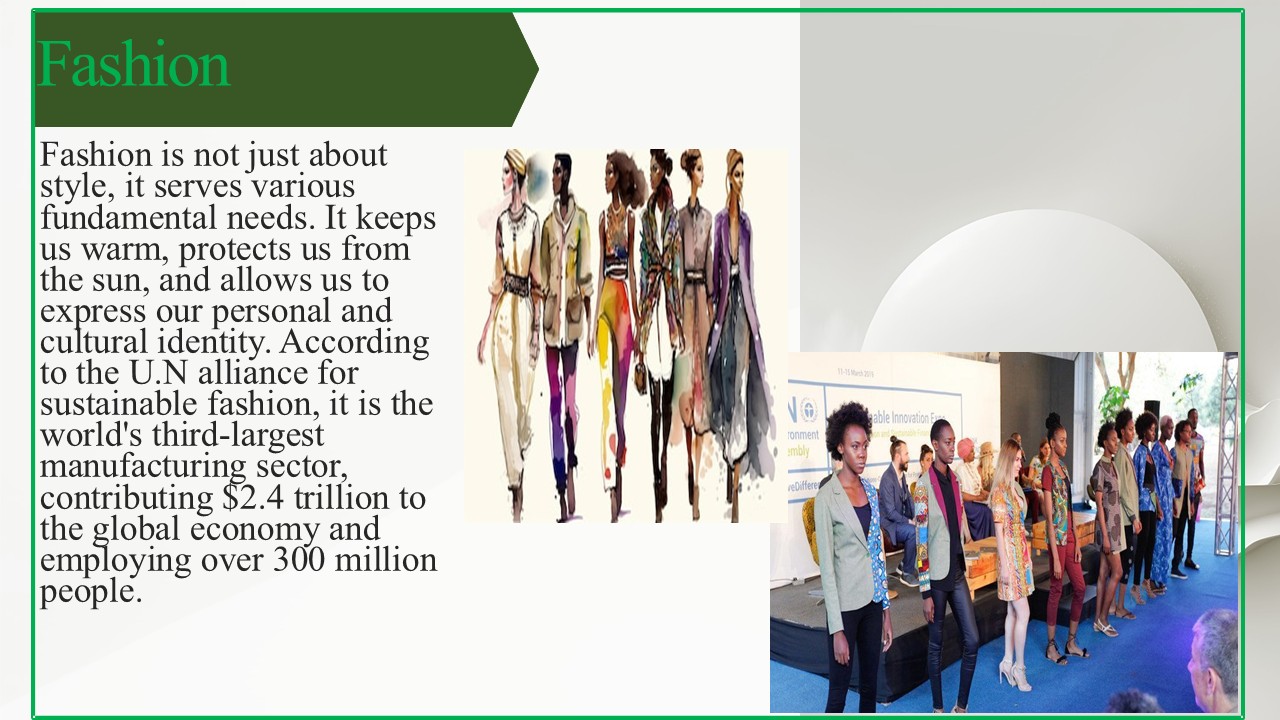
Fashion is the world’s third-largest manufacturing sector — contributing $2.4 trillion to the global economy and employing over 300 million people (UN Alliance for Sustainable Fashion). It serves fundamental needs: warmth, sun protection, and cultural identity expression.
The problem
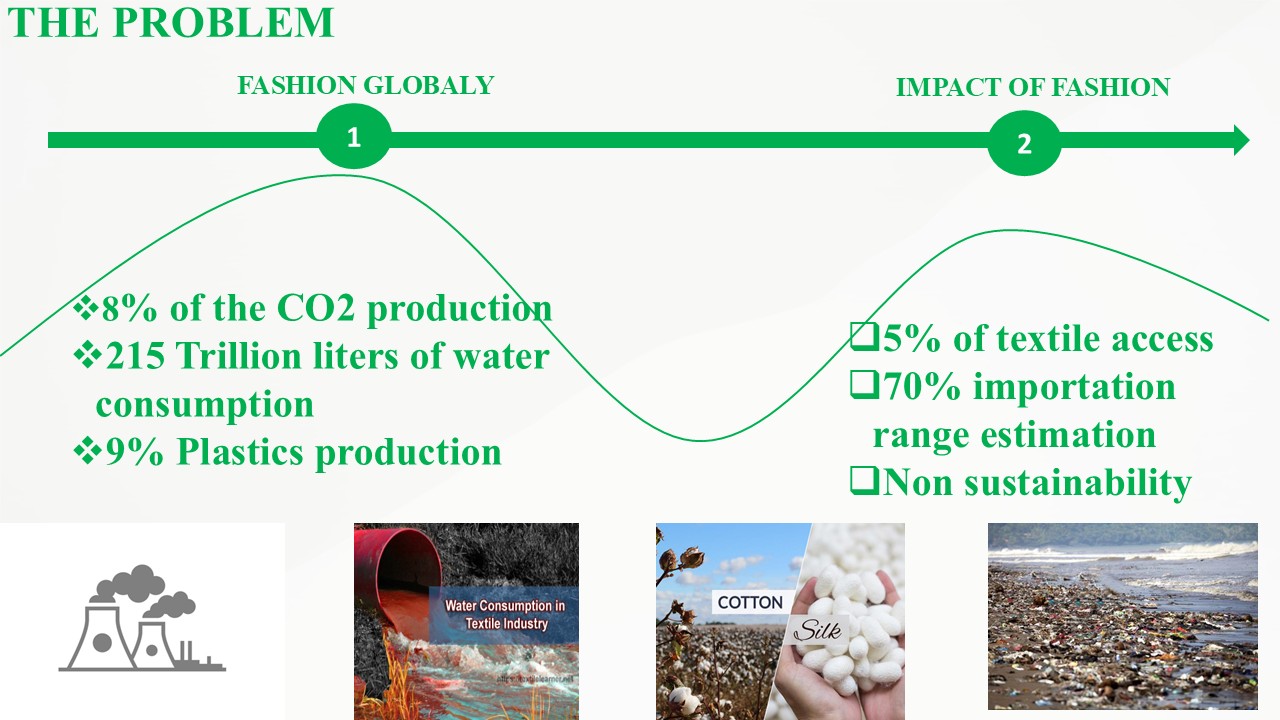
Global fashion impact:
- 8% of global CO₂ production
- 215 trillion litres of water consumption
- 9% of plastics production
In Rwanda: only 5% textile access · 70% import dependency · non-sustainable supply chains.
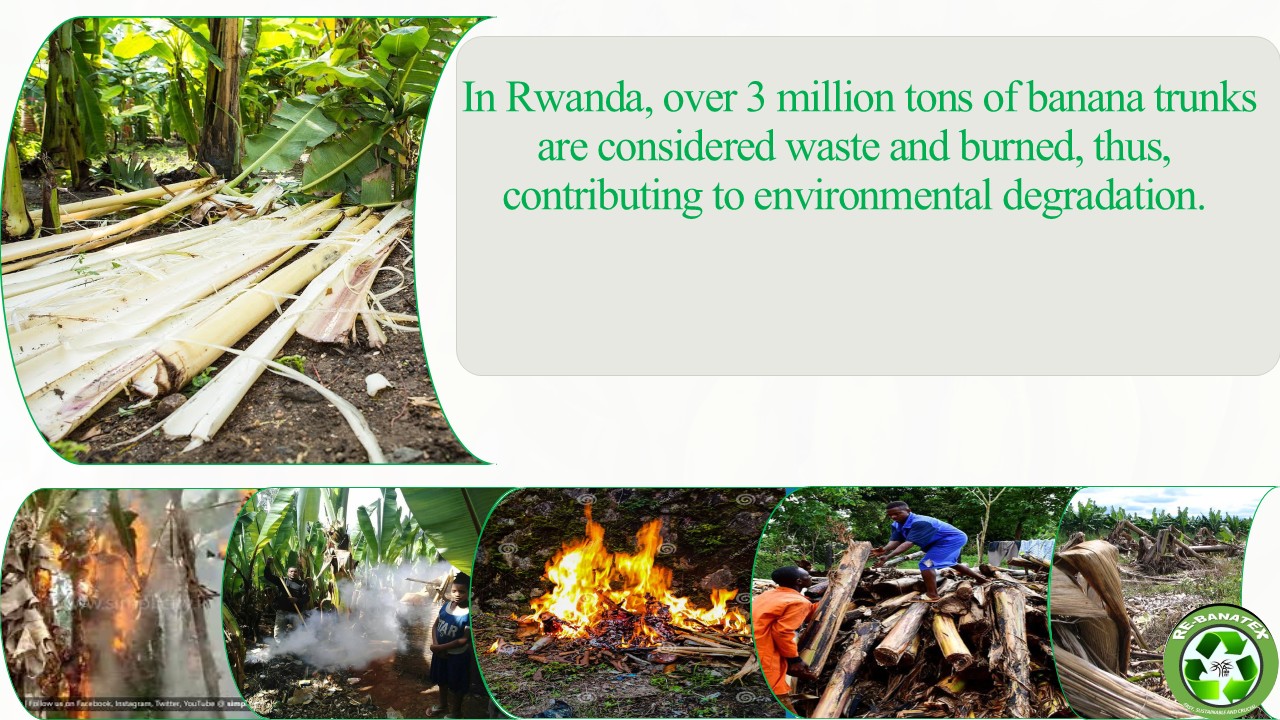
Banana waste: over 3 million tonnes of banana trunks are discarded and burned annually in Rwanda, contributing to environmental degradation.
The solution
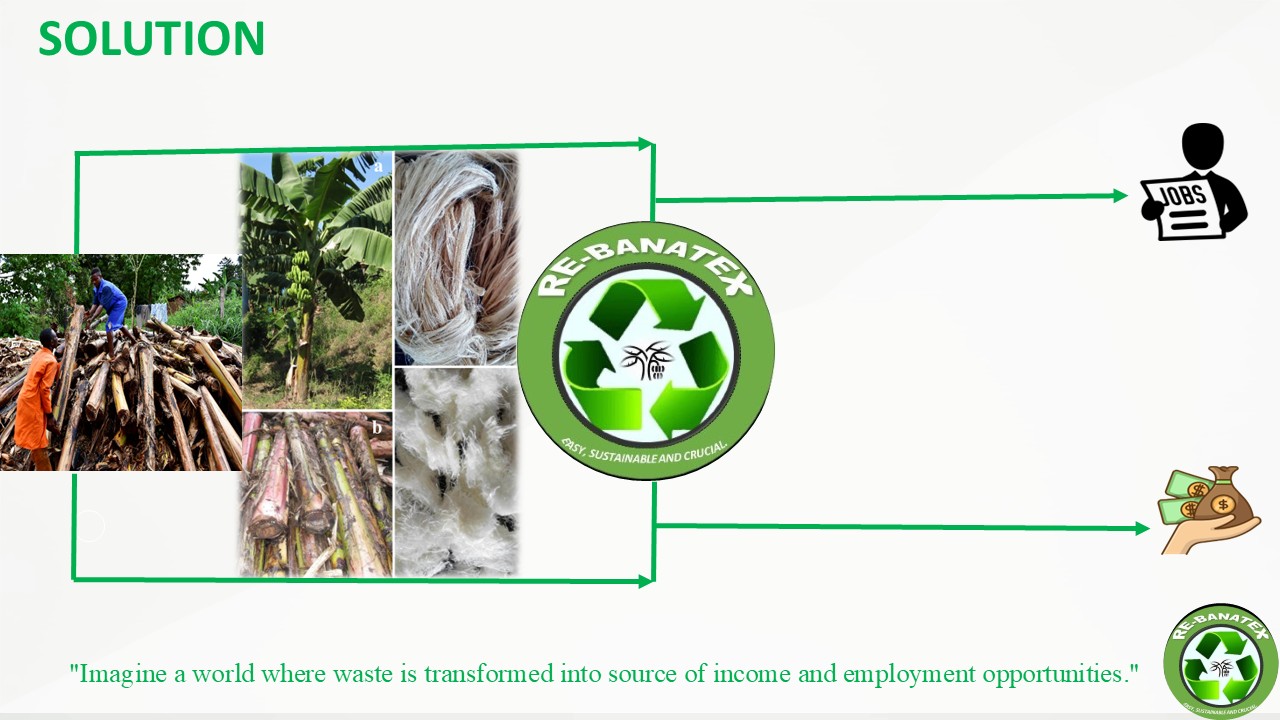
Imagine a world where waste is transformed into a source of income and employment opportunities.
RE-BANATEX collects banana trunk waste, extracts and treats fibers, and produces textile products — creating jobs and income from material that would otherwise be burned.
Methodology
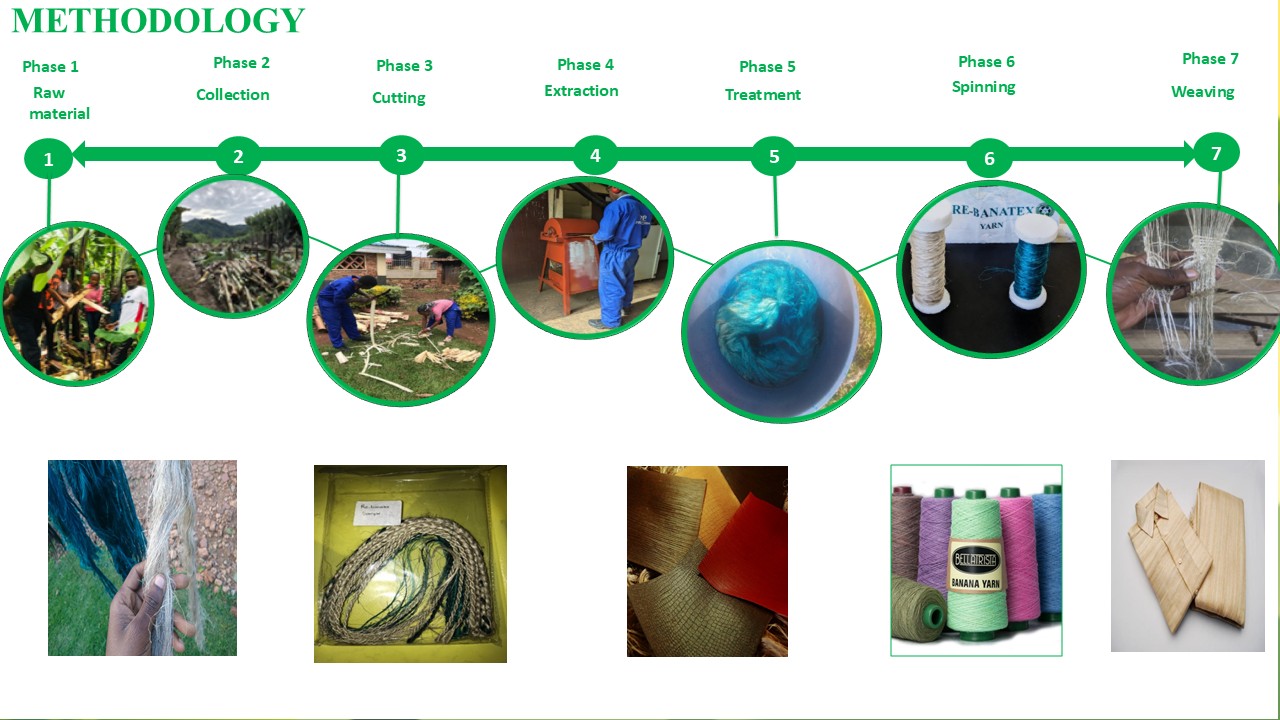
Seven-phase production process:
- Raw material — banana plantation sourcing
- Collection — trunk harvesting after fruit harvest
- Cutting — stems prepared for extraction
- Extraction — mechanical fiber separation
- Treatment — fiber processing and dyeing
- Spinning — RE-BANATEX yarn production
- Weaving — finished textile products
Market opportunity
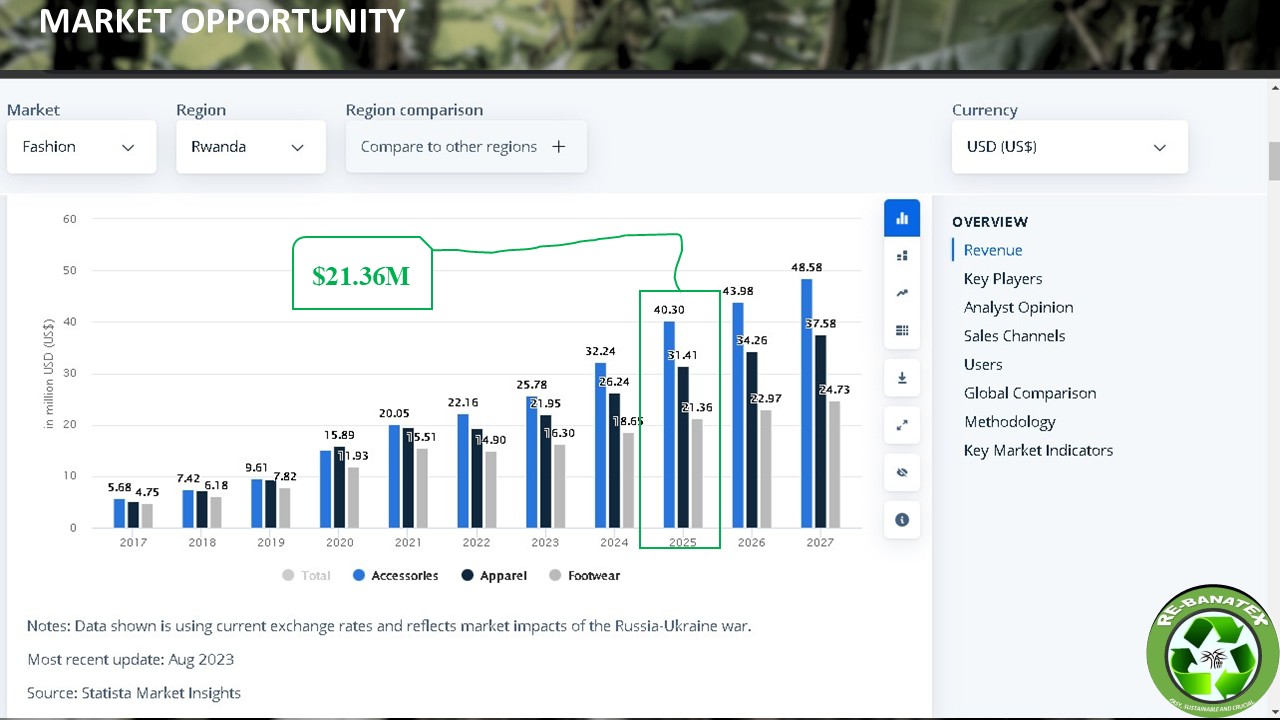
Rwanda’s fashion market is growing rapidly. Footwear segment alone projected at $21.36M by 2025 (Statista), with apparel at $31.41M and accessories at $40.30M in the same year.
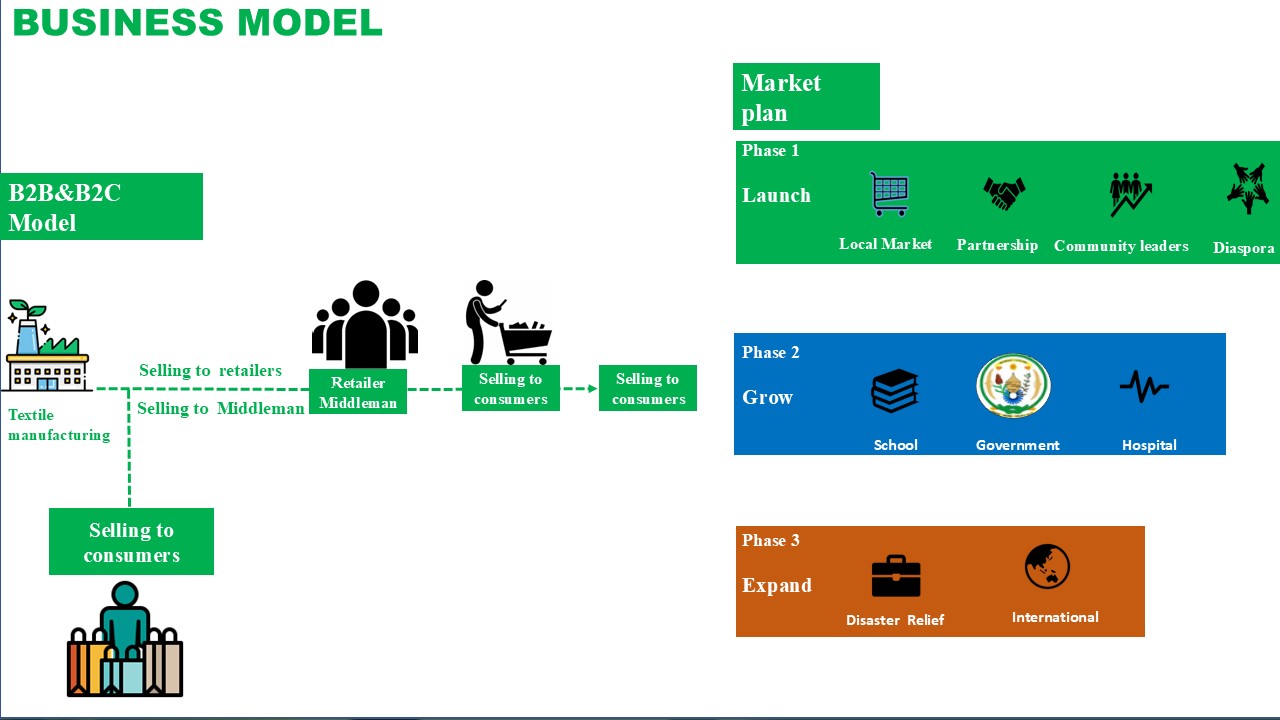
Business model
B2B & B2C — textile manufacturing sold through retailers, middlemen, and direct to consumers.
Market plan:
- Phase 1 — Launch: Local market, partnerships, community leaders, diaspora
- Phase 2 — Grow: Schools, government, hospitals
- Phase 3 — Expand: Disaster relief, international markets
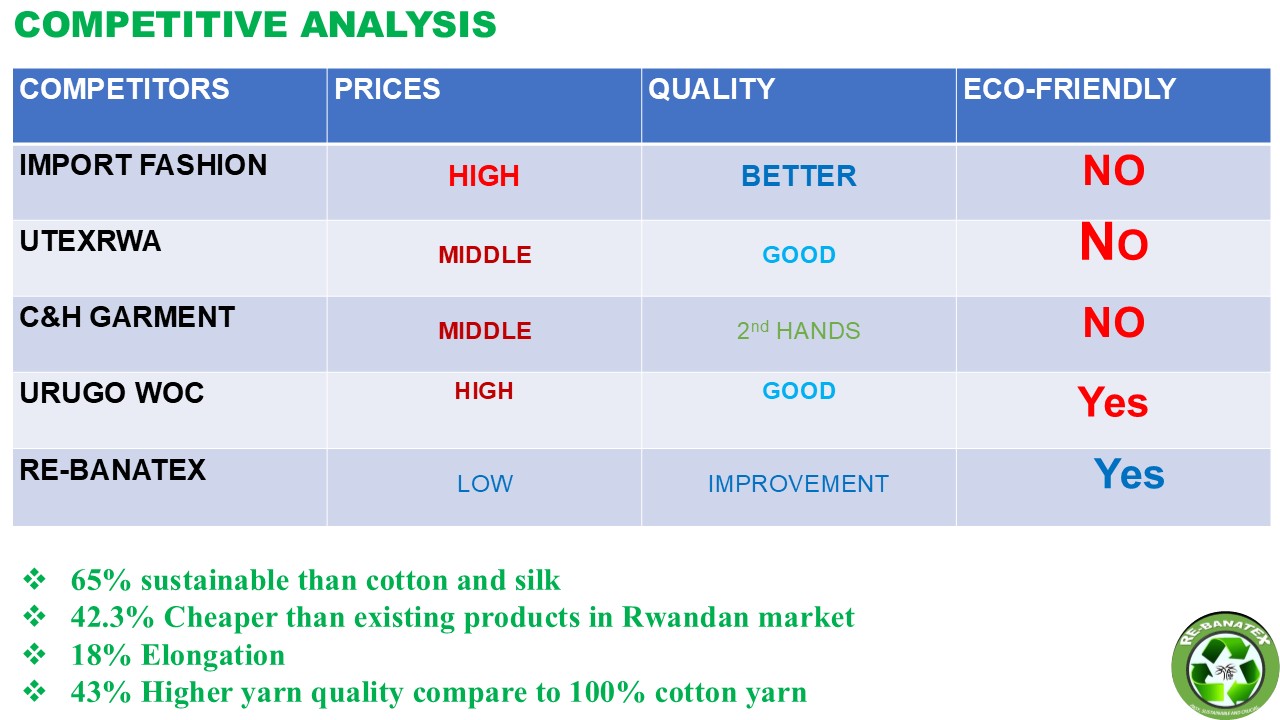
Competitive analysis
| Competitor | Prices | Quality | Eco-friendly |
|---|---|---|---|
| Import fashion | High | Better | No |
| UTEXRWA | Middle | Good | No |
| C&H Garment | Middle | 2nd hands | No |
| URUGO WOC | High | Good | Yes |
| RE-BANATEX | Low | Improving | Yes |
- 65% more sustainable than cotton and silk
- 42.3% cheaper than existing products in the Rwandan market
- 18% elongation · 43% higher yarn quality vs 100% cotton yarn
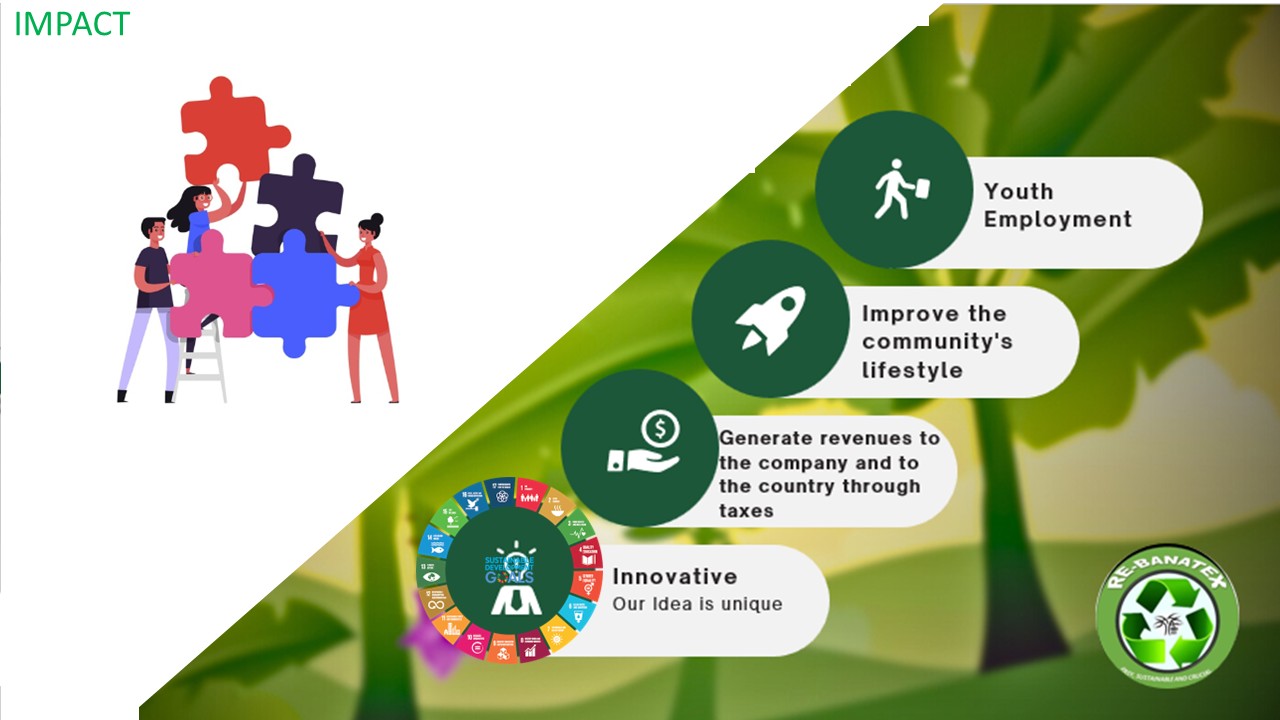
Impact
- Youth employment in fiber collection and textile production
- Improved community lifestyle through local sustainable industry
- Revenue generation for the company and country through taxes
- Innovative — unique circular-economy model aligned with SDGs
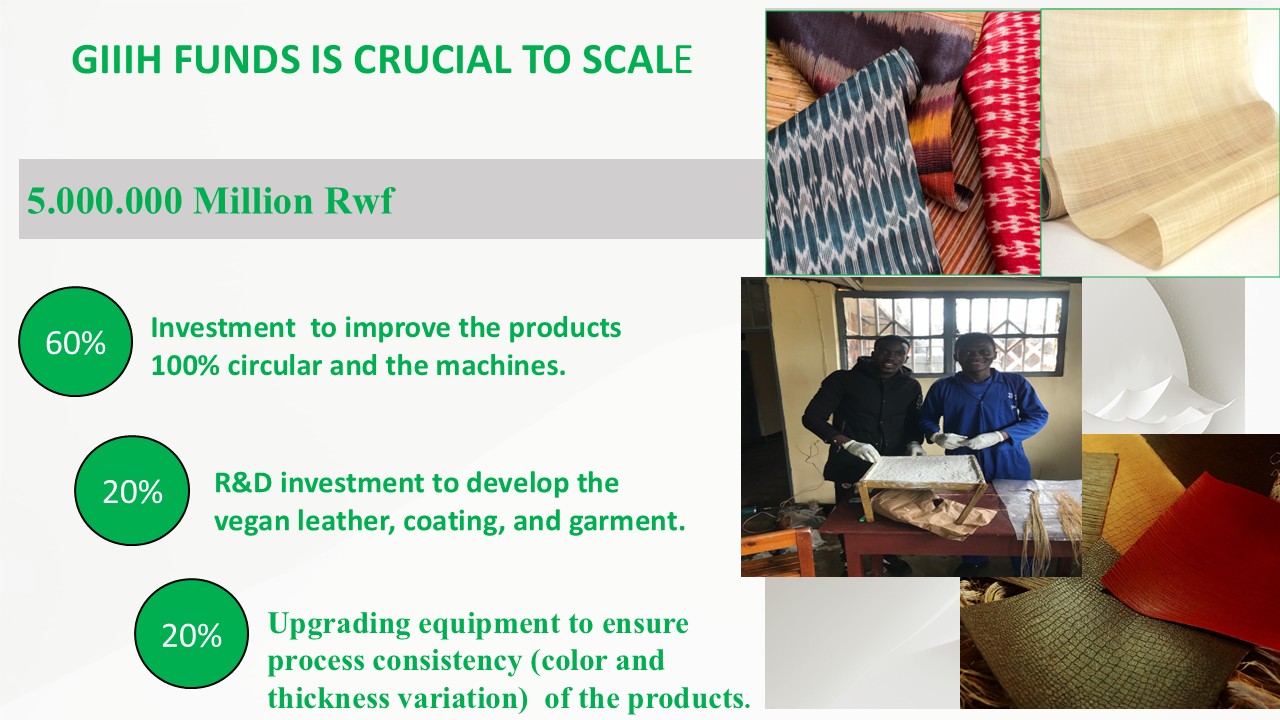
GIIH funding needs
Seeking 5,000,000 RWF from GIIH to scale:
- 60% — Improve products to 100% circular and upgrade machines
- 20% — R&D for vegan leather, coating, and garments
- 20% — Equipment upgrades for process consistency (color and thickness)
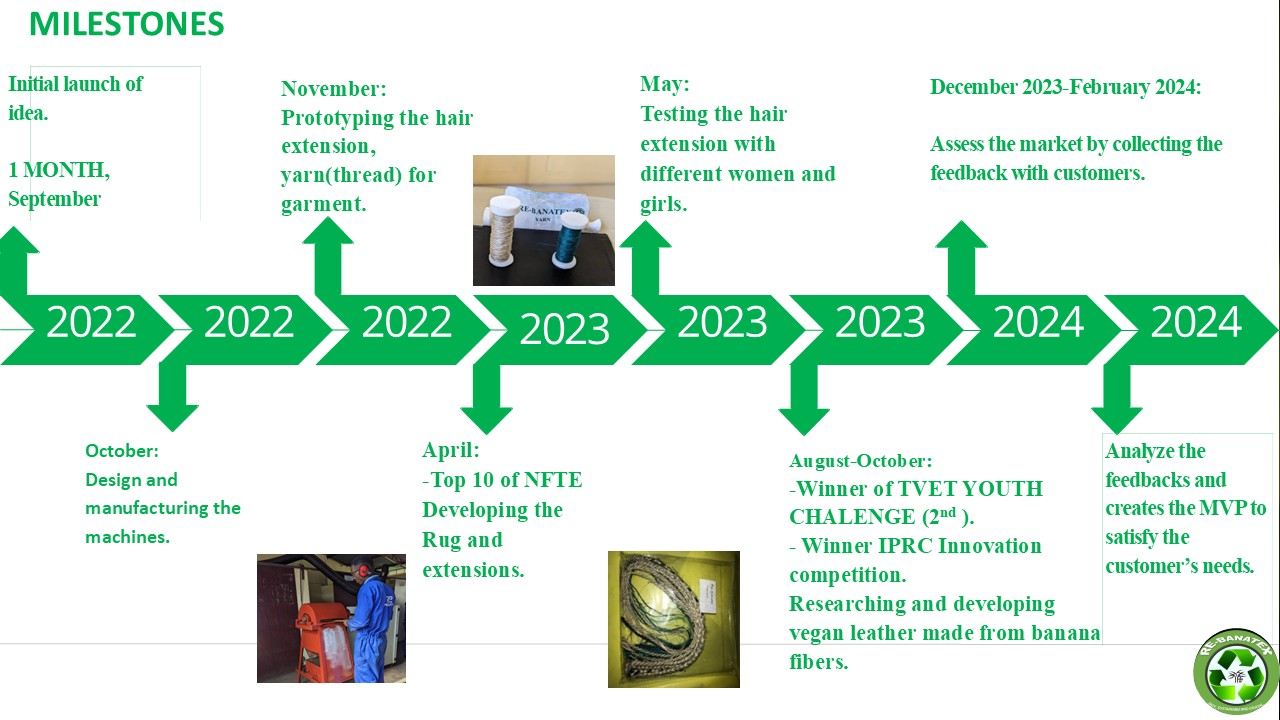
Milestones
- Sep 2022: Initial launch of idea
- Oct 2022: Design and manufacture processing machines
- Nov 2022: Prototype hair extensions and garment yarn
- Apr 2023: Top 10 NFTE · developed rugs and extensions
- May 2023: Tested hair extensions with women and girls
- Aug–Oct 2023: 2nd place TVET Youth Challenge · IPRC Innovation competition winner · vegan leather R&D
- Dec 2023 – Feb 2024: Market assessment and customer feedback
- 2024: Build MVP from customer feedback
Team
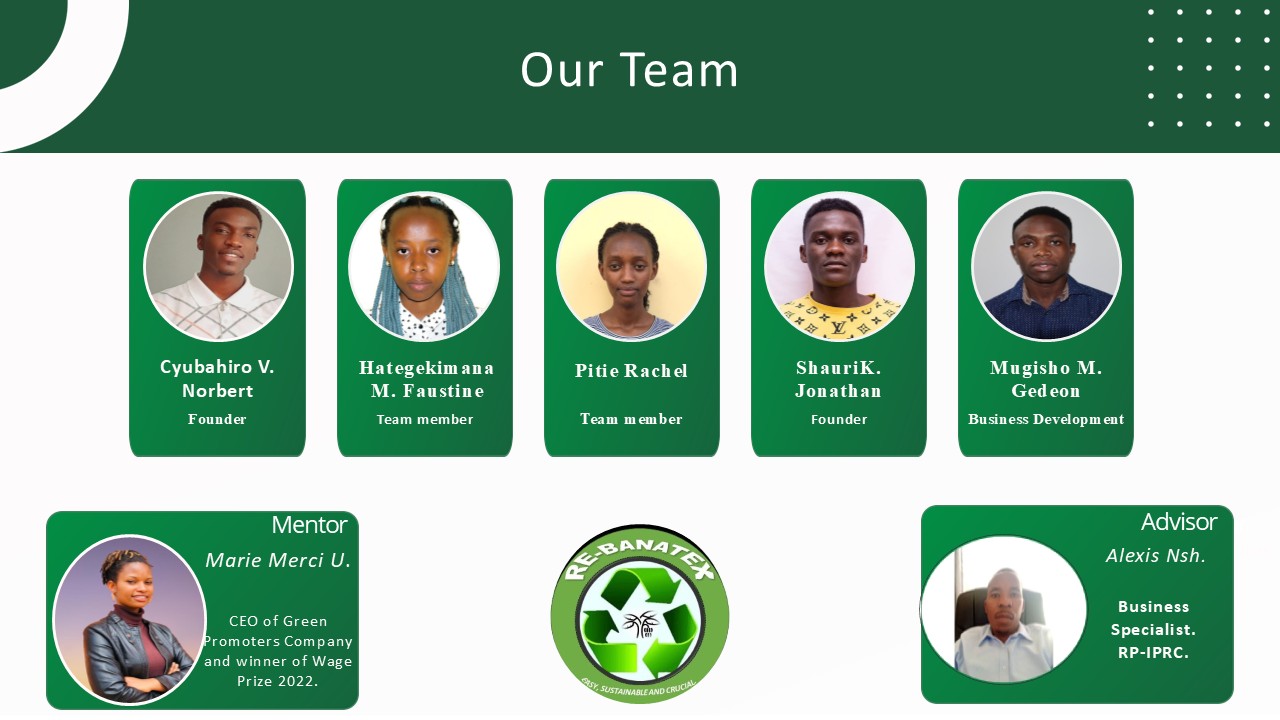
- Cyubahiro V. Norbert — Founder
- Shauri K. Jonathan — Founder
- Hategekimana M. Faustine — Team member
- Pitie Rachel — Team member
- Mugisho M. Gedeon — Business development advisor
Mentors: Marie Merci U. (CEO, Green Promoters · Wage Prize 2022 winner) · Alexis Nsh. (Business specialist, RP-IPRC)